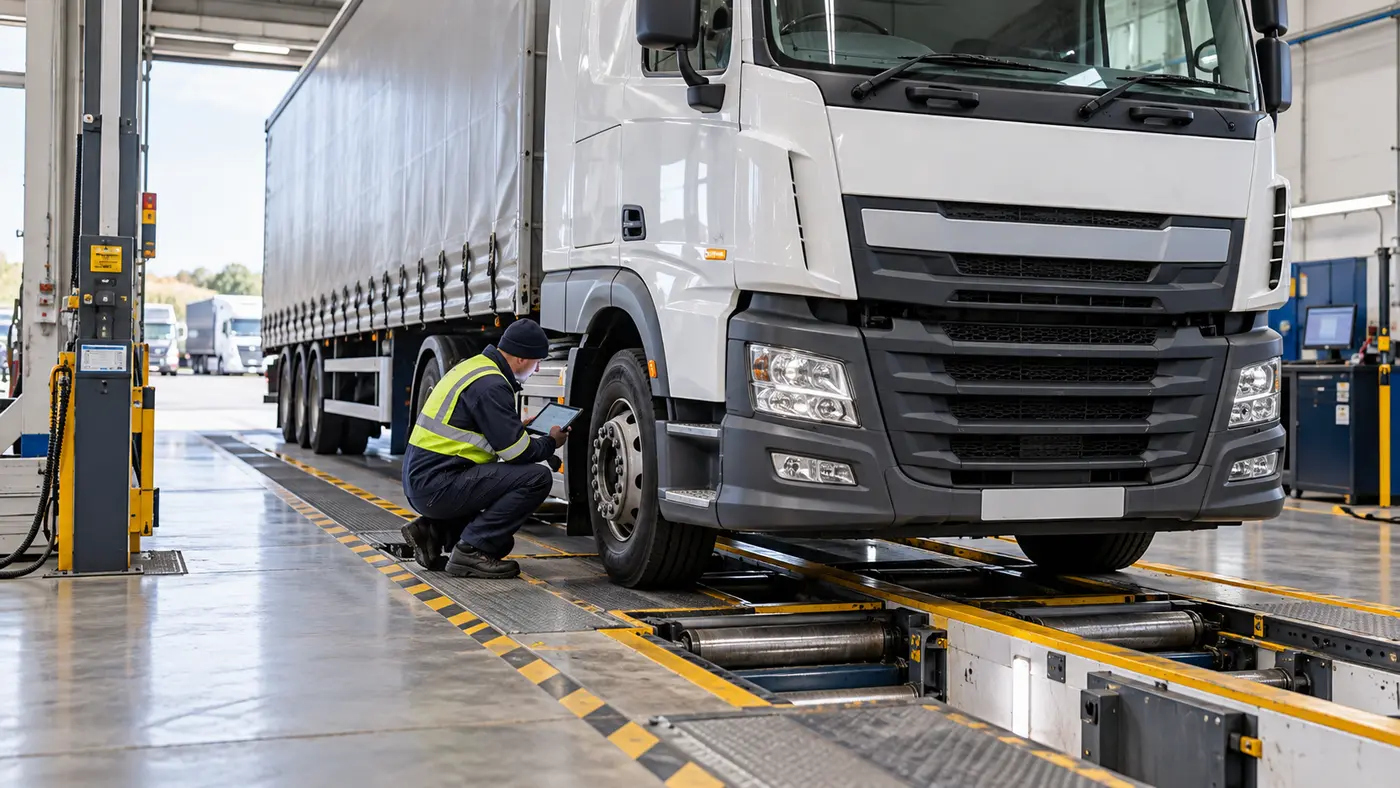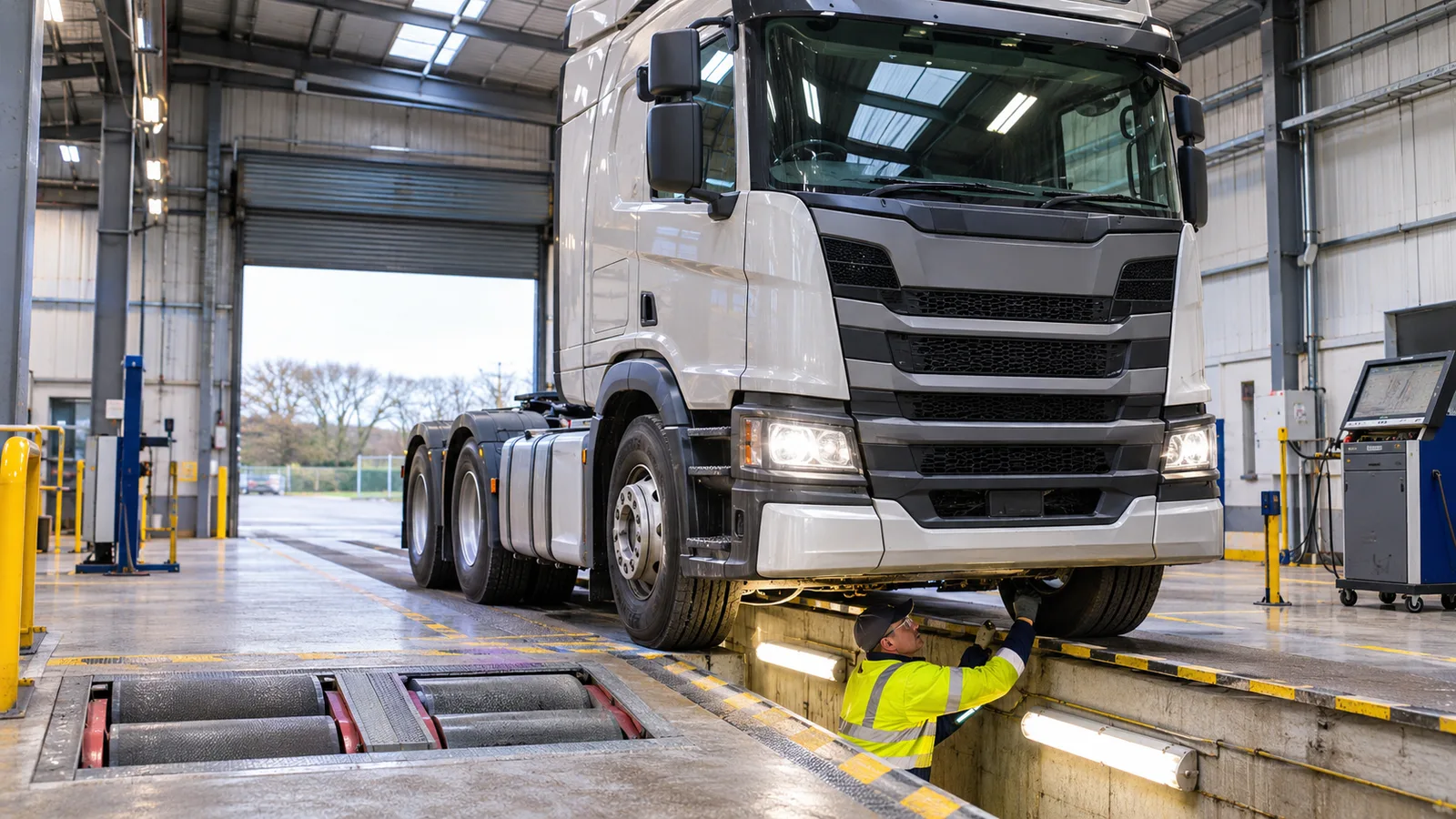
The annual test is one of the fixed costs of running a lorry, and it is easy to underestimate. The fee itself is modest next to a set of tyres, but a failed test brings a second fee, time off the road and a repair bill you did not plan for. This guide sets out what GOV.UK says about the test and its fees, so you can budget for it before you buy a truck on Trucksalot rather than after.
The figures below are the ones published on GOV.UK when we checked them in November 2026. Fees are reviewed from time to time, so check the current page before you rely on a number.
When the first test is due
GOV.UK says lorries, buses and coaches, and trailers must be tested each year, and that the first test should be 12 months after the vehicle was first registered with DVLA. For a nearly new lorry that means a test is not far away, even if the truck looks perfect. For an older one, the date to look for is the expiry of the current certificate.
If it is the first time a heavy goods vehicle has been tested, GOV.UK says you need to fill in an application form before you book. Ask the seller whether that has been done, and check the MOT history to see the pattern of passes, failures and advisories.
What the test costs
For tests at an authorised testing facility, GOV.UK lists the following fees for a lorry, depending on the number of axles:
- 2-axle vehicle: £91 for the test, £35 for a retest within 14 days
- 3-axle vehicle: £113 for the test, £49 for a retest within 14 days
- 4 or more axles: £137 for the test, £65 for a retest within 14 days
The same table shows a retest after 14 days costing the same as a full test, so there is a clear reason to book the repair and the retest promptly. GOV.UK also lists a service charge for using an authorised testing facility, with a maximum of £70 for a lorry. Ask the facility what it charges in total before you book, because that figure is set by the facility and sits on top of the test fee. We have not covered the fees at DVSA test centres here, so check those on GOV.UK if that is where you plan to test.
If you are comparing adverts, the axle count matters for this cost as well as for payload. Our guides to tractor unit axle layouts and reading an 8×4 tipper advert explain what the layouts mean in practice.
Why a failure costs more than the fee
GOV.UK is plain about what happens if a lorry fails. You have to take it away and get the faults fixed, and unlike with a car MOT, most centres will not be able to make the repairs for you. Once the work is done you book another test and pay a retest fee. The inspector may allow on-site emergency repairs for some major faults, and minor repairs if they can be done quickly and safely, but DVSA staff cannot provide tools or materials or help with repairs.
In practice a failure can mean:
- a second booking and the retest fee
- paying for the repair, and possibly recovery to a workshop
- days when the truck is not earning
- a rushed repair if the retest falls close to the 14-day point
When you set a running-cost budget, treat the test fee as the small part. A sensible allowance for preparation and likely repairs is worth more than the fee.
Preparing before the day
GOV.UK suggests having your vehicle checked by a qualified mechanic to prepare for the test, using the test standards in the Heavy goods vehicle inspection manual. It also tells you to check the headlamp aim and, for a heavy goods vehicle, the brakes. Voluntary brake, smoke and headlamp checks are listed with their own prices at authorised testing facilities, so a pre-test check can be priced in advance.
Before you go, GOV.UK says to bring:
- your appointment letter, if you have one
- the vehicle’s plating certificate
- a tachograph exemption form, if the vehicle is exempt
You will normally drive your own vehicle during the test, and GOV.UK says to arrive 10 minutes before the test time. If the truck needs a tachograph calibration or other paperwork sorted, do it before the booking rather than the week after.
If you disagree with a result
GOV.UK says you need to contact DVSA within 2 working days of getting your result if you want to dispute it. A formal appeal must be submitted within 14 days of the test, using form VTG17 for HGV and trailer annual tests, and the appeal fee is £39. Keep the paperwork and take photographs of anything you think was marked unfairly.
Put it in the numbers when you buy
If you are looking at a used truck, ask when the next test is due and when it last passed. A lorry with a test due in the next few weeks is a lorry you may need to prepare, book and possibly repair almost straight away, and that belongs in your offer. The same applies to the other first-year costs, from vehicle tax to insurance. The notes on buying your first used tractor unit cover more of the budget, and tractor units for sale shows what is listed now.
If you are funding the purchase, tell the finance broker about any work the truck needs before it can pass a test, because it changes the total you need to raise. Direct Commercial Finance is a broker, not a lender, and finance is subject to status and lender approval. You can read how enquiries work on the truck finance page.
This article is general information, not legal or financial advice. Fees and rules can change, so check the current GOV.UK pages for the vehicle you are testing.