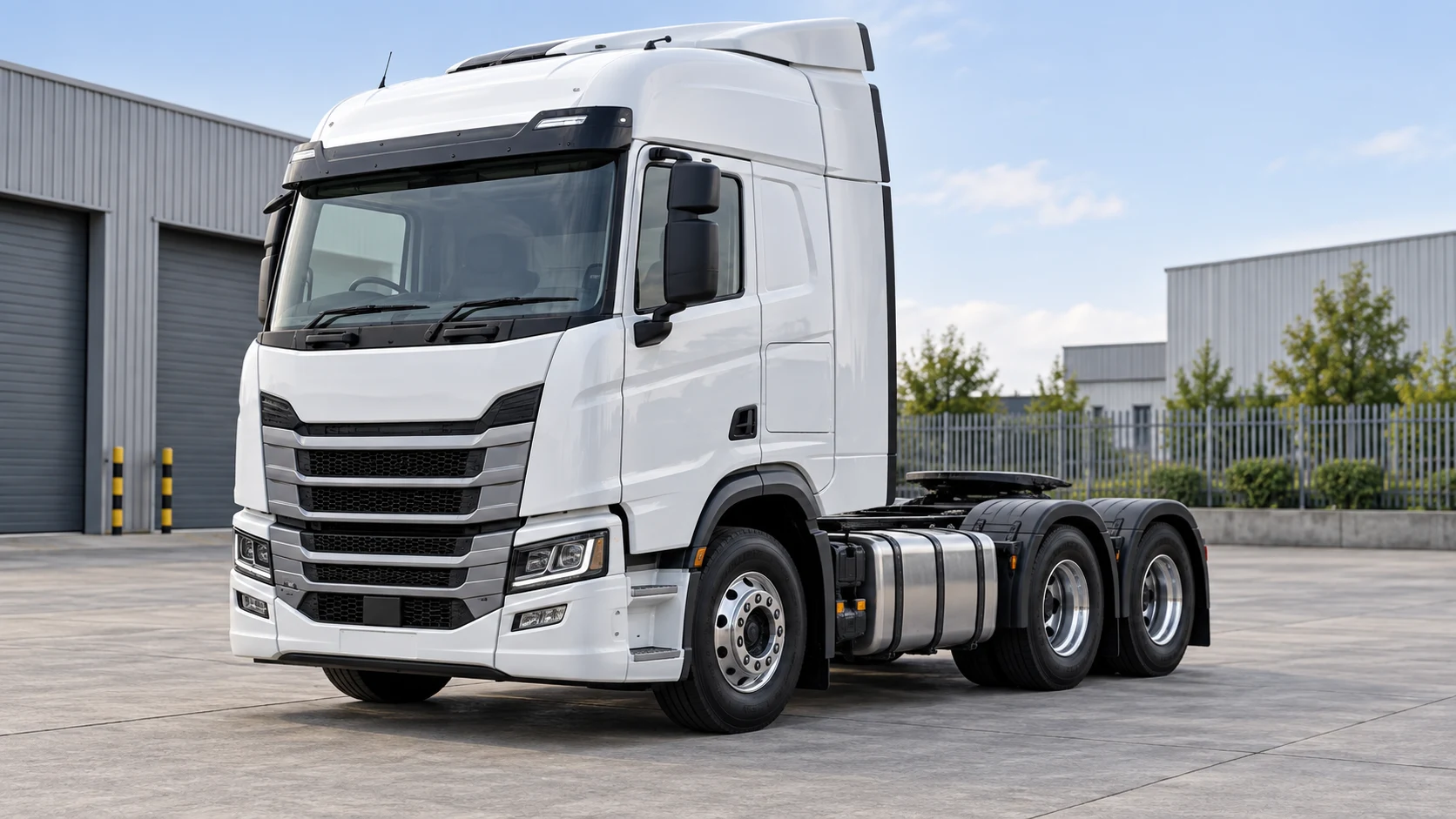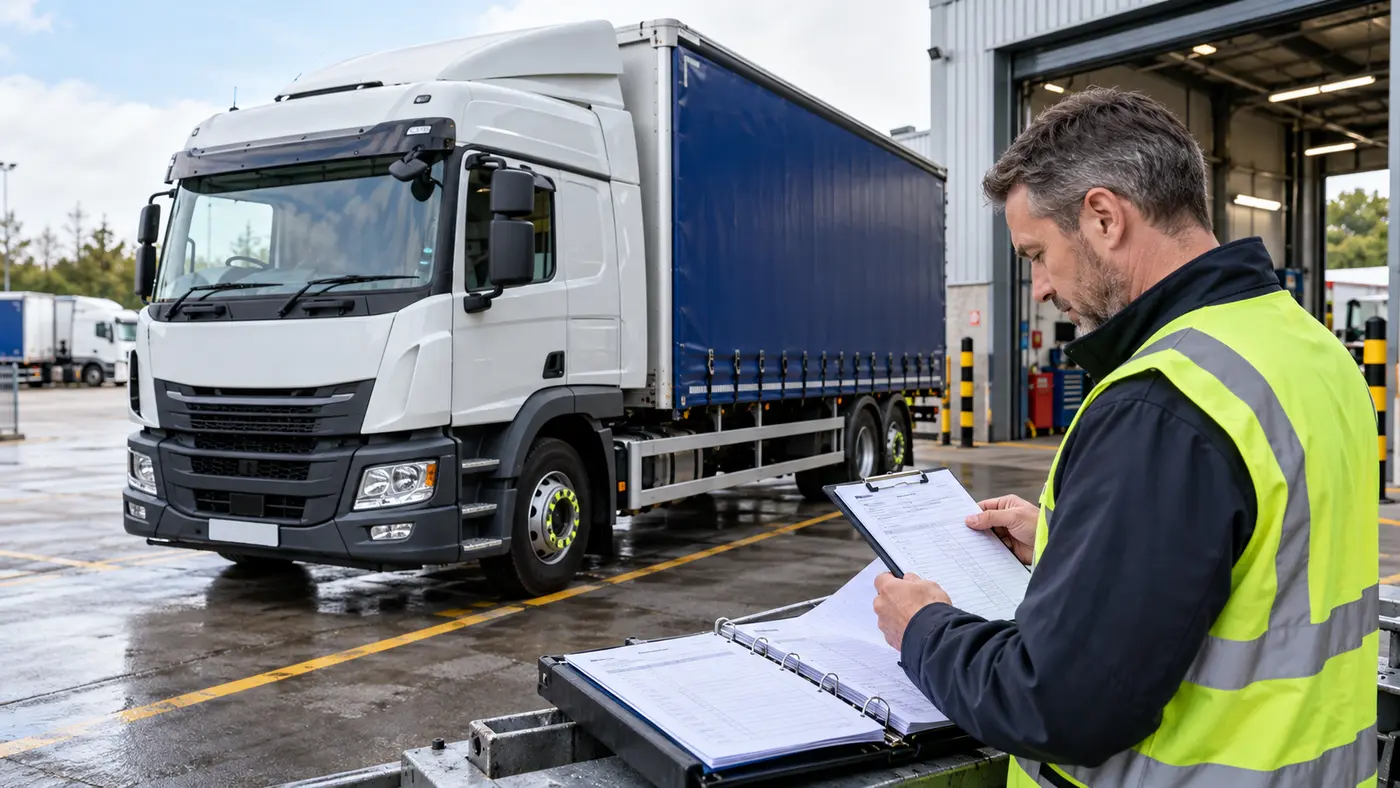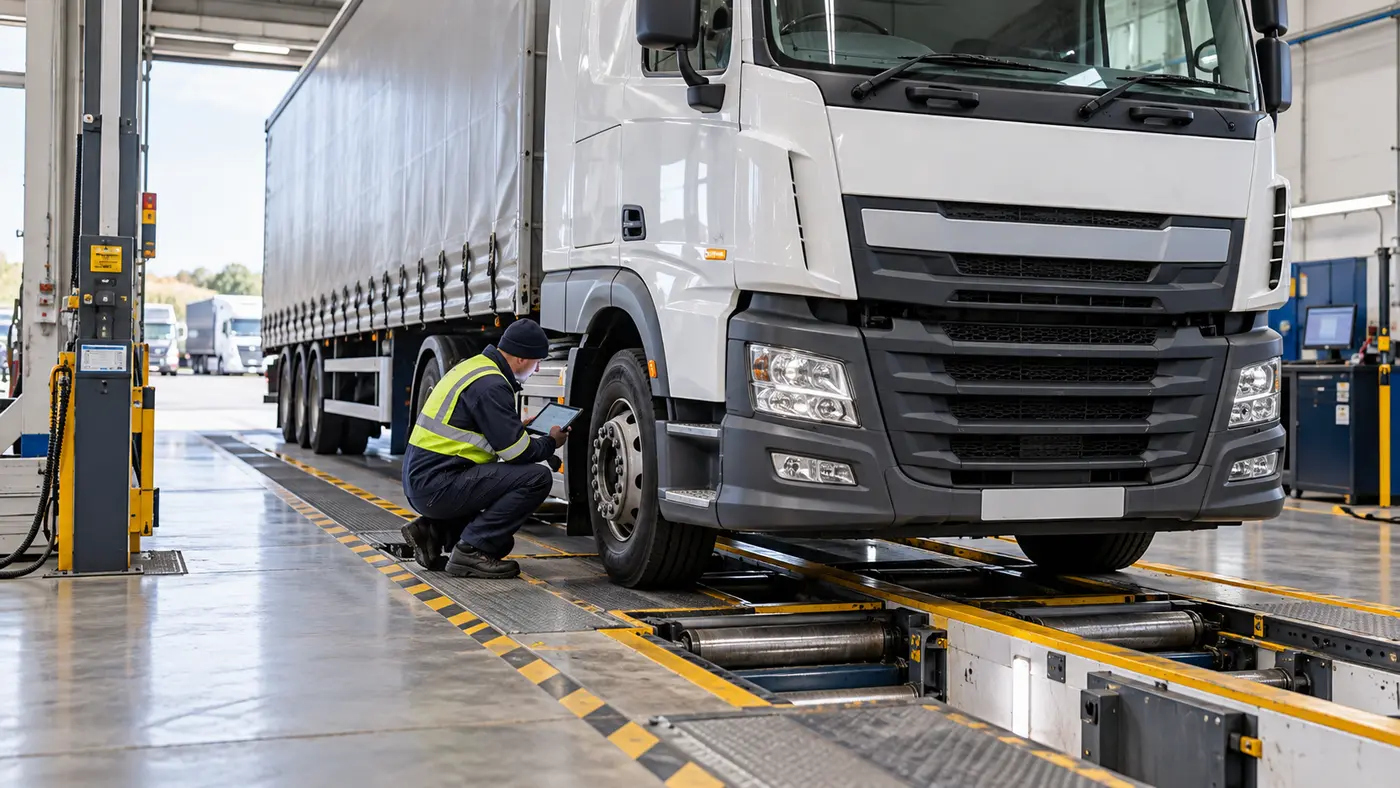
A used tractor unit is the usual way into running your own truck. Most expensive mistakes come from checking the paperwork late, not from the truck itself. This guide covers what to confirm first, what to look at, and how to work out the cash you need on day one.
Get the permissions right first
Your driver entitlement and the operator’s licence are two separate permissions. You need the right licence category to drive, and the business needs an operator’s licence for the truck. Check the plated weight of the unit against what your licence authorises before you agree a price. A fair price does not mean the truck can legally be operated by you.
The licence type depends on the work. A restricted licence generally covers carrying your own goods. A standard national licence covers carrying other people’s goods for hire or reward within the UK, and a standard international licence adds international journeys. If you plan to haul for others, expect to need a standard licence. Our guide to operator licences and the truck you buy goes through this, and the GOV.UK guidance takes precedence.
Match the unit to your trailers
On an advert, the first axle number counts wheel positions and the second counts driven axles. A 4×2 has one driven axle. A 6×2 has three axles with one driven, and on UK fleet units the usual set-up is a lifting mid axle. If an advert does not state the layout, ask rather than assume.
Fifth-wheel height, make, and whether it is fixed or sliding all need to suit the trailers you already run. Read 4×2, 6×2 or 6×4 tractor units explained before you shortlist.
Read the test history, then view the truck
GOV.UK’s MOT history service shows HGV test results for England, Scotland and Wales from 2018, and from 2017 for Northern Ireland. Older tests may not appear. You need the registration number, and the 11-digit number on the V5C shows where a test was carried out and which items failed or were advised.
- Compare the advert’s mileage with the mileage at each test, in date order. Unexplained drops or long gaps between tests are worth a question.
- Failures on brakes, steering, suspension or emissions tell you more than unrepaired advisories. Ask for repair invoices.
- The history does not show finance agreements, ownership, bodies or fifth-wheel height, and it does not tell you whether VAT applies.
Our guide to checking MOT history before you buy a truck has more. At the viewing, check the drive-axle tyres, the fifth wheel and for air leaks. Ask which axle lifts, the gearbox make and whether a retarder is fitted. “Automatic” on its own is not a gearbox specification.
Questions to ask the seller
- Who is the registered keeper, and is the V5C in the seller’s name?
- Is the price ex VAT, VAT-inclusive or sold under the margin scheme, and will I get a VAT invoice?
- Is there finance outstanding on the unit, and is the title clear?
- Which axle lifts, which gearbox is fitted, and is there a retarder?
- What type and height of fifth wheel is fitted?
- Can I see repair invoices for any test failures?
- What is included in the sale, and which fitted equipment will be removed before collection?
Advert prices on Trucksalot usually exclude VAT unless the seller says otherwise. See price excluding VAT on truck adverts.
What it costs on day one
The monthly payment is only part of it. With hire purchase, VAT on the vehicle is usually payable up front, alongside your deposit. These worked examples use the same basis as the finance examples on Trucksalot adverts: a 10% deposit, VAT at 20% paid up front, 60 monthly payments and an illustrative 8% rate on the ex-VAT price.
- £20,000 ex VAT: £2,000 deposit plus £4,000 VAT, so about £6,000 on day one, then roughly £365 a month.
- £30,000 ex VAT: £3,000 deposit plus £6,000 VAT, so about £9,000 on day one, then roughly £547 a month.
- £40,000 ex VAT: £4,000 deposit plus £8,000 VAT, so about £12,000 on day one, then roughly £730 a month.
These are examples only, not adverts or quotes. The rate, deposit and term available to your business depend on your circumstances and the lender. The figures leave out insurance, vehicle tax, tyres, maintenance, fuel and operator licence costs.
Ways to fund a used unit
With hire purchase you own the unit once the final payment and any option-to-purchase fee are paid. You pay a deposit, VAT is usually paid up front, and the funder can recover the unit if payments stop. With a finance lease the funder keeps ownership, the initial outlay is lower and VAT is usually spread across the rentals. With contract hire the unit goes back at the end, VAT is usually spread across the rentals, and maintenance can be included, so check mileage and condition terms and end-of-term charges.
- Ask about documentation fees, option-to-purchase fees and early settlement charges before you sign.
- Ask early whether a funder will lend to a new business or a sole trader, and whether the age or mileage of the unit affects the offer.
- Have the registration number and the seller’s details ready, so the funder can look at the exact unit.
Which option suits you depends on how you trade and how your accountant treats the cost, so take advice on the tax side. When you are ready to look, browse tractor units for sale and send a finance enquiry from the advert so the truck’s details go with it.