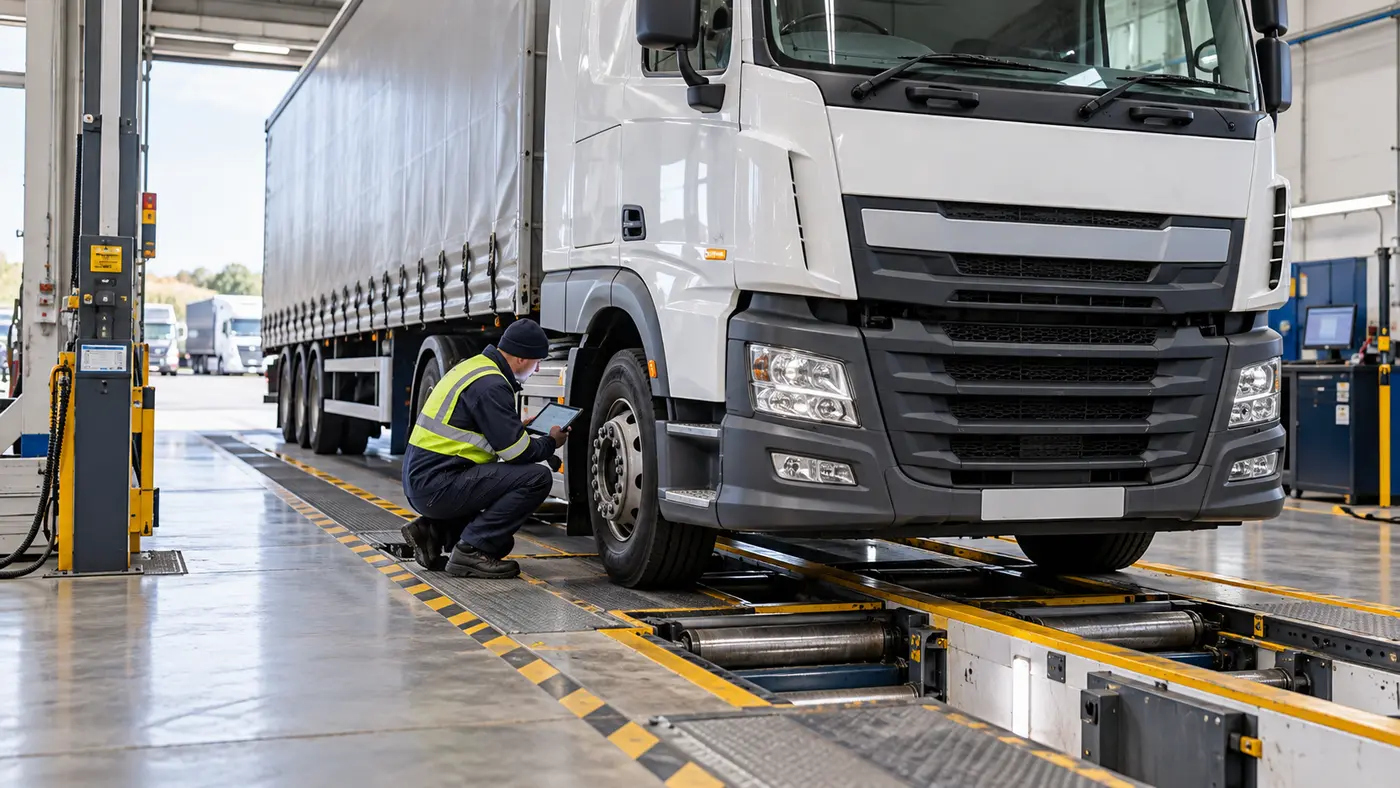
The mileage on a truck advert is the seller’s figure. The MOT history is a separate record, made at a test station, and it is one of the few documents you can check before you spend a day on the road. For an HGV, trailer, bus or coach tested in England, Scotland or Wales, GOV.UK’s MOT history service shows results from 2018 onwards. You need the registration number.
Use it before you enquire, not after you have agreed a price. Approved adverts on Trucksalot already show year, mileage and price. The history tells you whether that mileage has moved in a straight line, and what failed last time.
What the history actually shows
For a test in Great Britain you can see whether the vehicle passed or failed, the mileage recorded at the test, and when the next test is due. With the 11-digit number from the log book (V5C) you can also see where the test was done and which items failed or were advised. Northern Ireland results available through the service start in 2017. Cars and vans go back further. Do not expect a 2012 HGV test to appear.
DVLA’s vehicle information service, which also needs the registration number, is the companion check: tax status, SORN, date of first registration, fuel type, European emissions status and revenue weight where DVLA holds them. Those details should match the advert. If the year of manufacture and the year the seller has written do not agree, ask why before you travel.
Read the mileage as a sequence
Write down the kilometres on the advert, then the mileages on each test, in date order. A lorry that shows 180,000 km in 2024 and 140,000 km in 2025 has a story that needs an explanation. A gap of several years with no test may mean the vehicle was off the road, exported, or tested somewhere the service does not show. None of those is automatically a reason to walk away. All of them are a reason to ask.
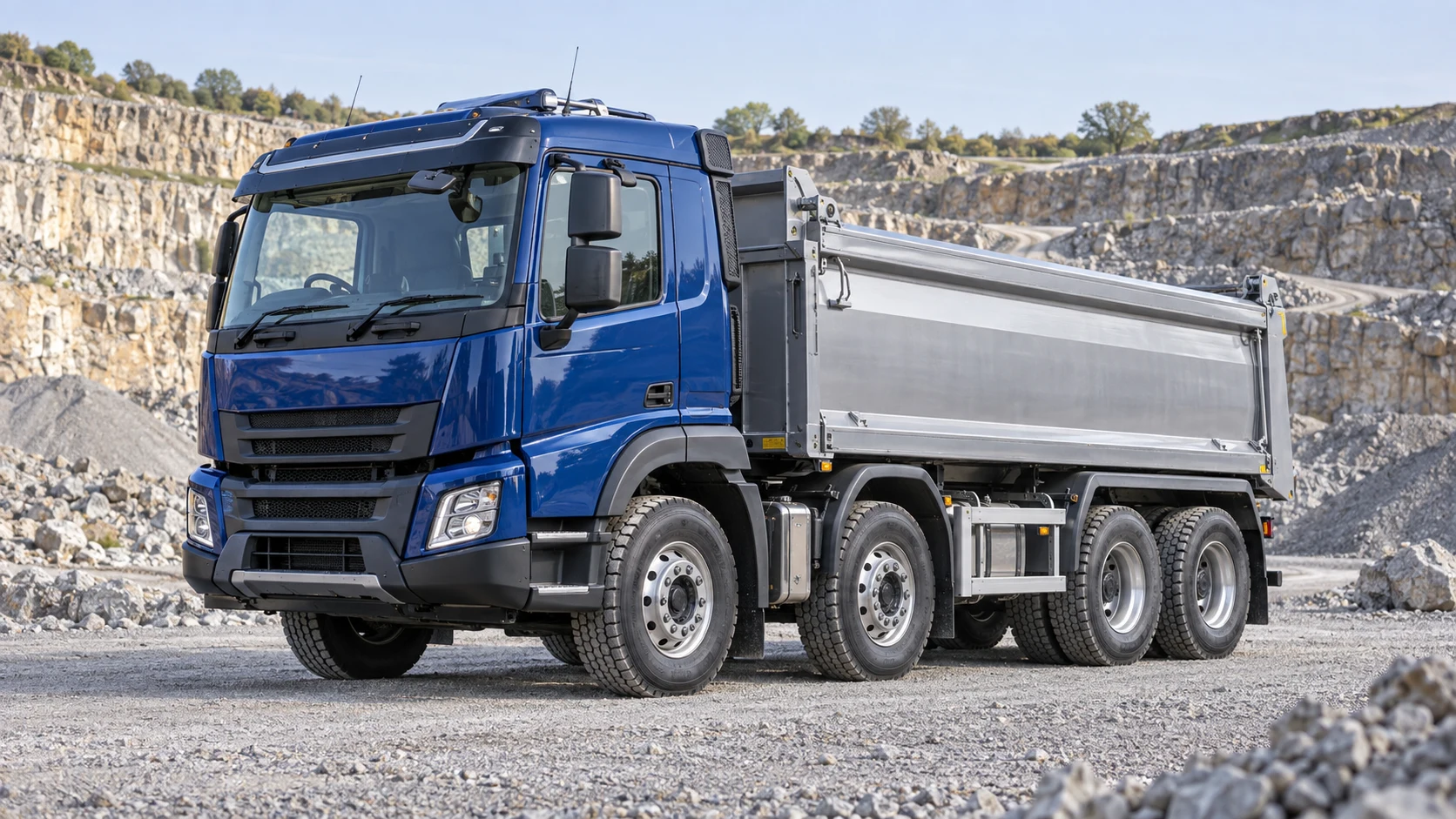
Mileage on a tipper or grab is still a weak guide to condition, because site work can be hard at a low odometer reading. The history is useful because it shows the pattern, not because a lower number is always better. Our notes on reading an 8×4 tipper advert and used grab wagons cover what the body and equipment add to that picture.
Failures and advisories
A failure for brakes, steering, suspension or emissions equipment is more useful than a pass with a long list of advisories that were never repaired. Ask the seller what was done, and whether they have the invoices. A fresh pass the week before the advert went live is normal when someone is selling. It does not replace the previous years.
Recalls sometimes appear in the MOT history, depending on the manufacturer. You can also check recalls separately. A recall is not a defect in that particular lorry until you know whether the work was done.
What the history will not tell you
It will not describe the crane on a grab, the body on a tipper, or the fifth-wheel height on a tractor unit. It will not say whether the lorry is on finance, whether the V5C is in the seller’s name, or whether VAT is due on top of the price. Those questions still belong in the enquiry.
Check the registration on GOV.UK, then open the advert again. If the two do not match, ask the seller to explain it in writing before you book the viewing.