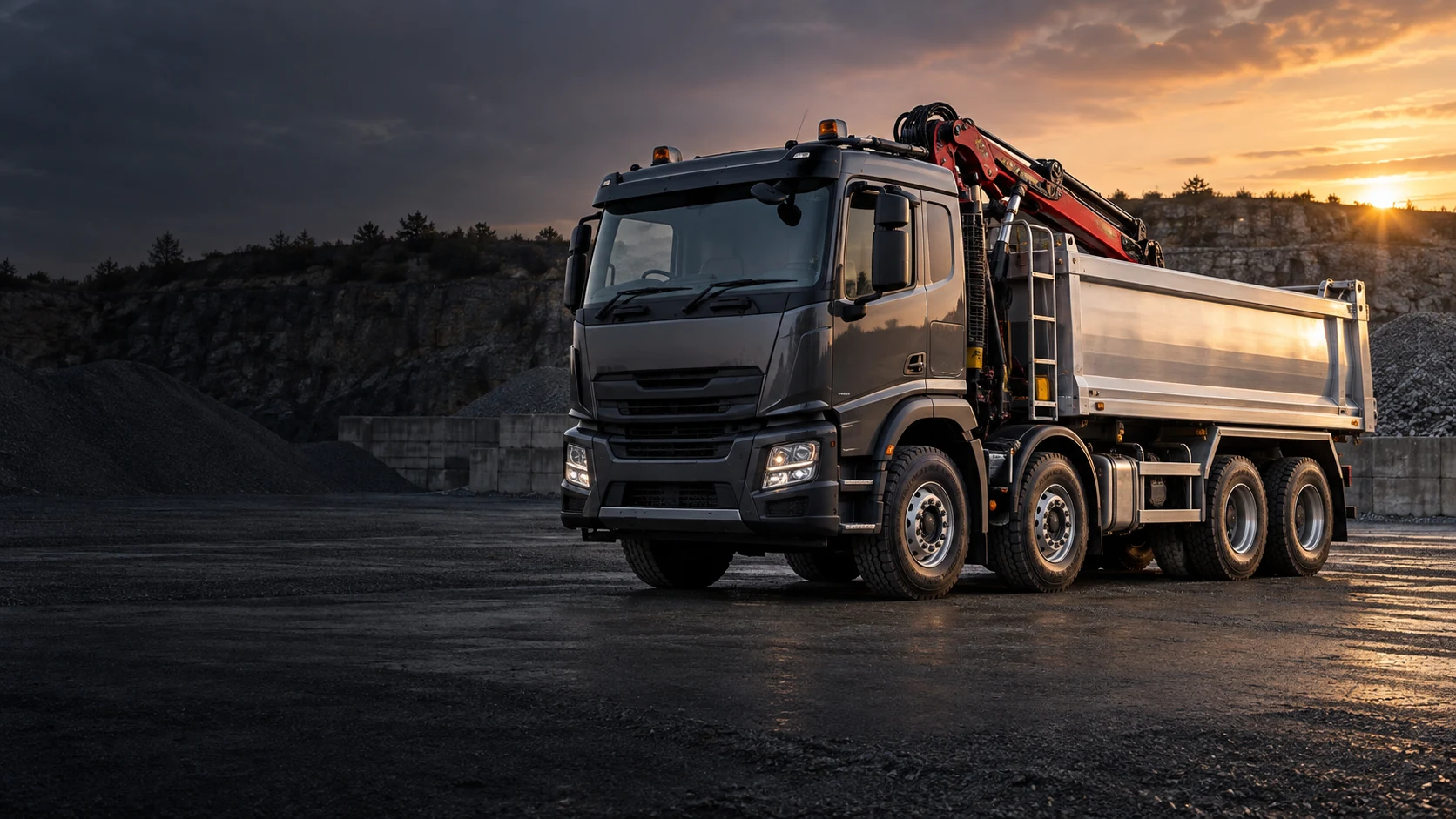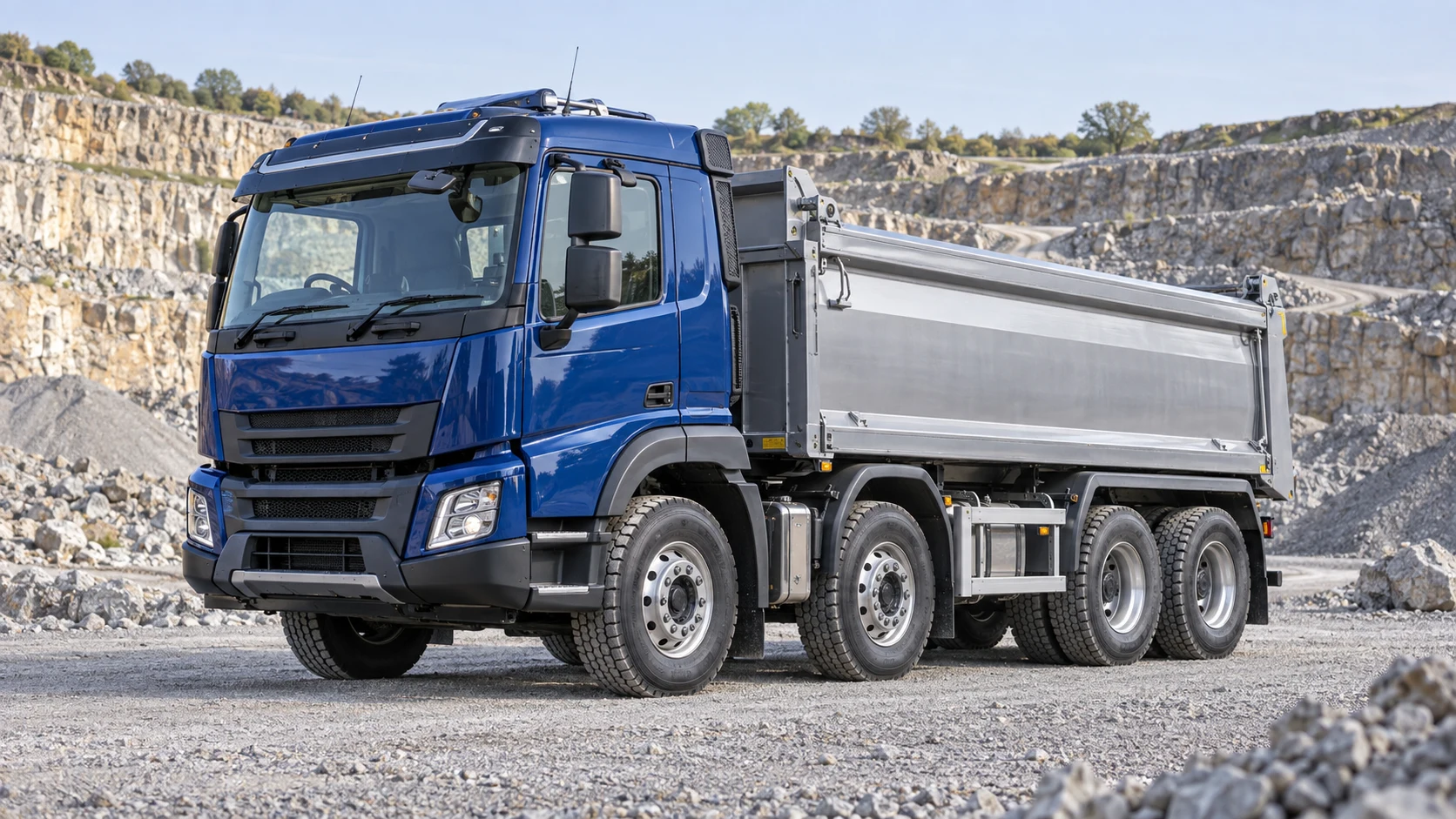
An 8×4 tipper advert should be read from the body backwards. The manufacturer and the horsepower get the headline. The floor, the sides, the ram and the plated weight decide whether the lorry will do the job you already have.
Approved tippers for sale on Trucksalot show the year, mileage, gross weight and price excluding VAT. Use this list before you enquire, so the questions are about the lorry rather than the photograph.
What the body is for
Steel still does the abrasive work: muck, rubble and site spoil. Aluminium saves weight on some aggregate and asphalt jobs and needs a different inspection for cracks and old repairs. An insulated body is for asphalt. “Heavy duty” is not a measurement. Ask for capacity, floor thickness, side height and how the tailgate is hung.
A ram that is scored or a floor that has been plated over is the usual reason a cheap tipper costs more than the advert. Look at those before you look at the stereo.
Axles, suspension and the plate
Most UK 8×4 tippers are plated at 32 tonnes gross. Read the ministry plate anyway. Equipment added later can change what the lorry should carry. Steel suspension is still chosen for hard sites. Air is chosen when the lorry spends more of its week on the road. Neither is automatically better. It has to match the week the truck will actually have.
MOT advisories for springs, bushes and brake lines are worth more than a fresh coat of chassis paint. Ask to see them.
Mileage needs a job description
A lower odometer is not automatically the better buy. A tipper that has lived on short site runs can be harder on emissions equipment than a higher-mileage lorry that has been serviced on a schedule. Ask where it has worked.
If you are also pricing a new tipper, hold the quotation to the same detail: body material, expected unladen weight and the suspension you specified. Then compare that figure with the working lorries already listed. The tipper listings are the used side of that comparison.