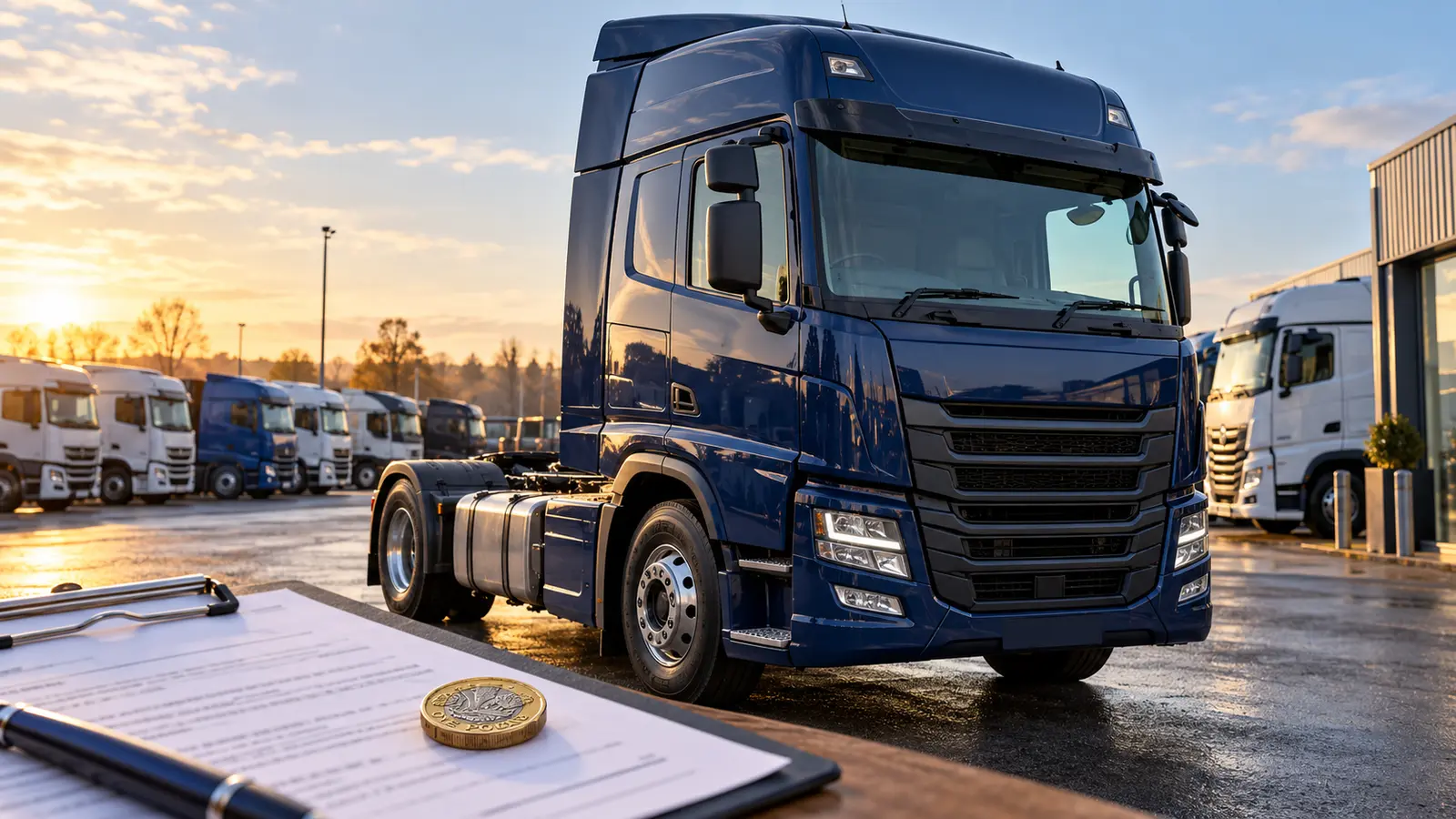
For twelve months, most heavy goods vehicles can be taxed for £1 a year. The Government announced the temporary reduced rate in May 2026, and it applies to eligible vehicles taxed between 1 July 2026 and 30 June 2027. If you are weighing up a lorry purchase this winter, it is worth knowing how it works, because it affects running costs in your first year and, in one important respect, it does not change what you must do on the day you collect the truck.
This is general information, not tax advice. Check your own position on GOV.UK or with your accountant before you commit.
What the £1 rate is
GOV.UK describes it as a temporary reduced rate of vehicle excise duty (VED) of £1 for most HGVs, in place from 1 July 2026 to 30 June 2027. The Treasury said it was part of a package recognising how exposed road haulage is to fuel costs, and it expected around 46,000 UK road freight businesses to benefit. You do not make a separate application. The reduced rate is applied when you tax an eligible vehicle inside the window, and DVLA guidance notes that your reminder letter may not show the £1 figure even though the correct rate is charged.
Which vehicles qualify
Eligibility follows the tax class on the V5C log book, not the make or the age of the truck. The classes DVLA lists are:
- Class 1: HGV, which covers most rigids and tractor units.
- Class 2: trailer HGV.
- Class 16: small island goods vehicles.
- Class 23: combined transport.
- Class 57: special types.
If a vehicle you are looking at sits in a different tax class, do not assume it gets the £1 rate. Ask the seller to confirm the class from the log book, or check with DVLA.
Buying a truck: tax does not transfer
This is the part that catches buyers out. GOV.UK is clear that when you buy a vehicle, the existing tax is not transferred to you, and you must tax it before you drive it. The seller tells DVLA they have sold the vehicle, their tax is cancelled, and they can claim a refund for any full months left. You, as the new keeper, tax it in your own name.
In practice that means three things before you collect a lorry you have found on Trucksalot:
- Have the V5C new keeper details ready, or know how the seller will send the log book.
- Be ready to tax the vehicle yourself before it moves. If it is taxed within the window and in an eligible class, the reduced rate applies.
- Do not treat any tax left on the vehicle as a bonus in the price. It is the seller’s, not yours.
If you taxed it before 1 July
Anyone who paid the full rate before 1 July 2026 is not entitled to a refund. DVLA says you can pay the £1 rate the next time you tax the vehicle during the reduced-rate period. If you already own trucks, check your renewal dates: a renewal that falls before 30 June 2027 should come in at £1 rather than the usual figure.
The HGV levy still applies where it applies
The HGV road user levy is a separate charge. DVLA states that if your vehicle is subject to the levy, you continue to pay it at the current rate alongside the £1 VED, and it is applied automatically when you renew. Toll and congestion charges are different again and are not affected.
What it does and does not change in your numbers
A £1 tax bill is a real saving on a first-year running-cost budget, but it is a small part of owning a truck. Insurance, fuel, tyres, servicing, driver costs and finance repayments are all bigger lines. The sensible approach is to build your budget with the normal rate as well, because GOV.UK does not say what rate applies after 30 June 2027. If a truck only works for you when tax is £1, it is thin.
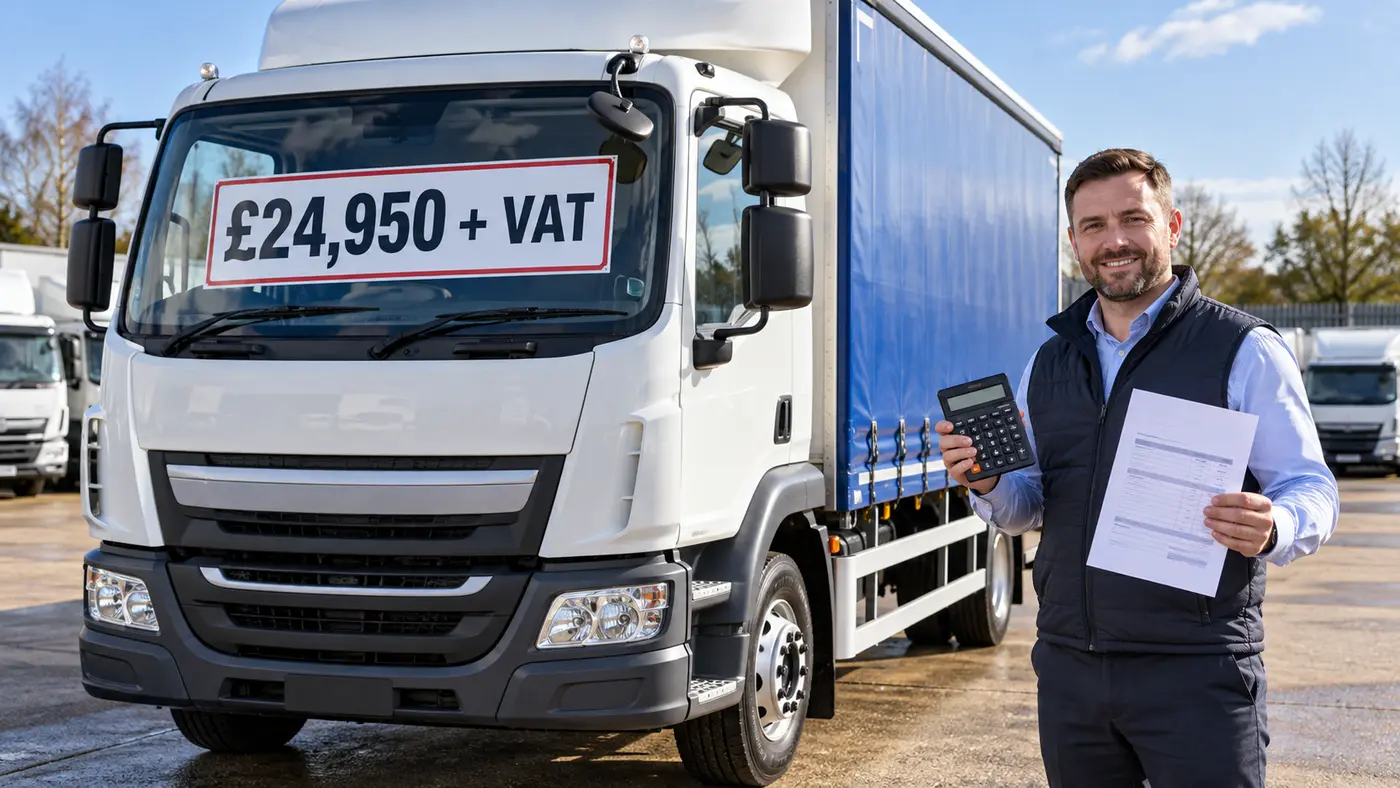
It also does not change the value of the lorry itself. Two tractor units with the same year and mileage are still better judged on the checks in our guides to MOT history and the operator’s licence, and on how the price is quoted, as explained in what “price excluding VAT” means.
A note on timing and funding
If you are planning to buy, the window gives you a reason to look at your timetable: the saving applies to vehicles taxed up to 30 June 2027, so there is no need to rush a purchase for the sake of £1. Buy the right truck, then tax it properly.
If you want to spread the cost of a vehicle, truck finance is available through Direct Commercial Finance. DCF is a broker, not a lender, and finance is subject to status and lender approval. Finance repayments sit alongside your running costs rather than replacing them, so keep tax, insurance and fuel in the same budget.
You can browse current adverts on Trucksalot, or go straight to tractor units if that is the work you have in mind.