A tachograph is easy to overlook when you are looking at a used lorry. It sits in the cab, it is not on the photo list, and the advert rarely mentions it. Yet if the truck will be driven under the drivers’ hours rules, the tachograph, its calibration dates and its recorded data are all part of what you are taking on. This guide covers the points GOV.UK sets out for vehicle operators, so you know what to ask before you travel to view a truck on Trucksalot.
Check the plaque and the dates
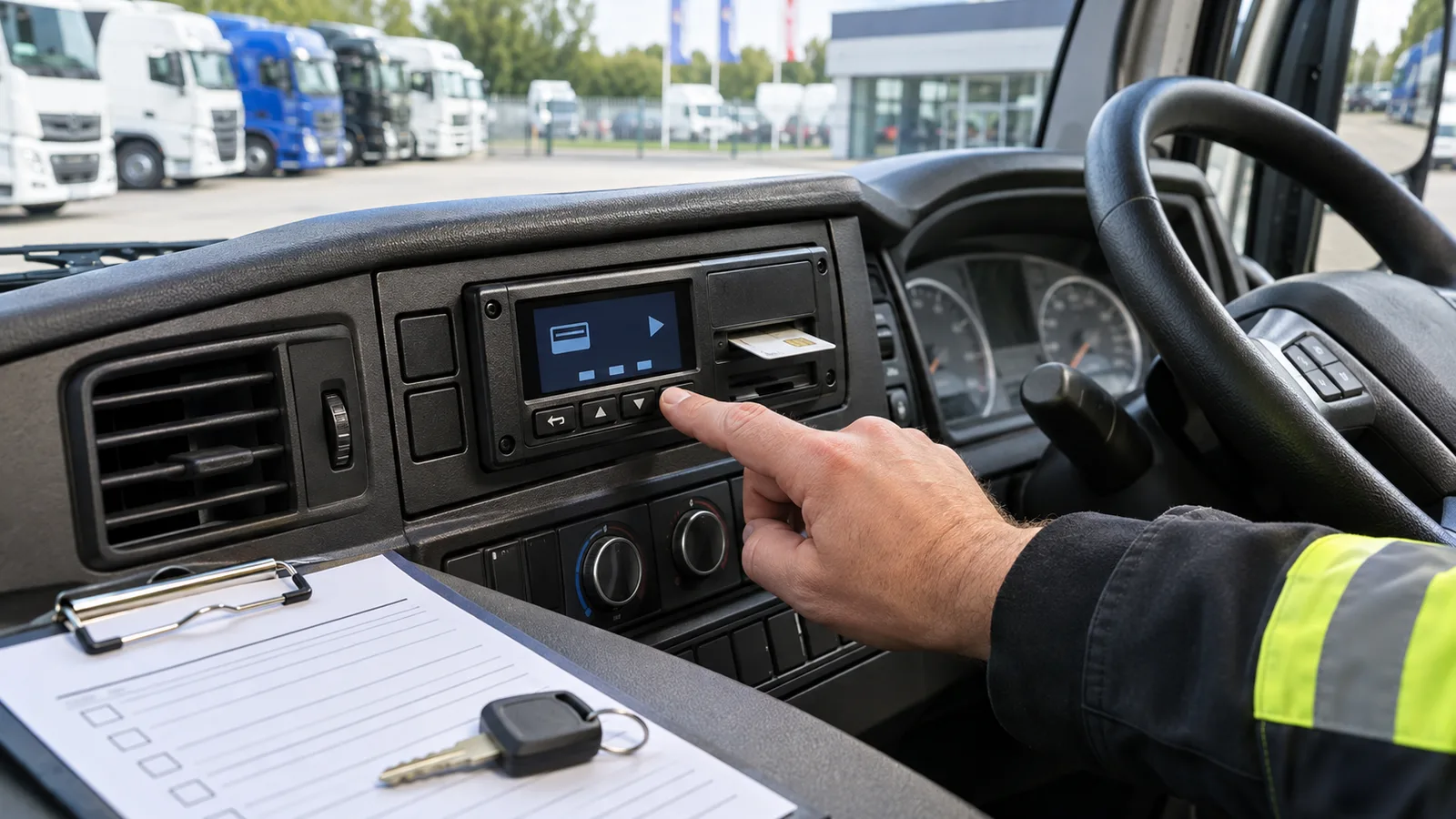
GOV.UK says an installation plaque must be fixed to or near the tachograph, and that the inspection and recalibration dates are shown on it and updated by the calibration centre. Ask for a photo of the plaque before you visit, or read it in person. Then compare it with the type of unit fitted:
- Analogue tachographs must be inspected every 2 years and recalibrated every 6 years.
- Digital and smart tachographs must be recalibrated every 2 years.
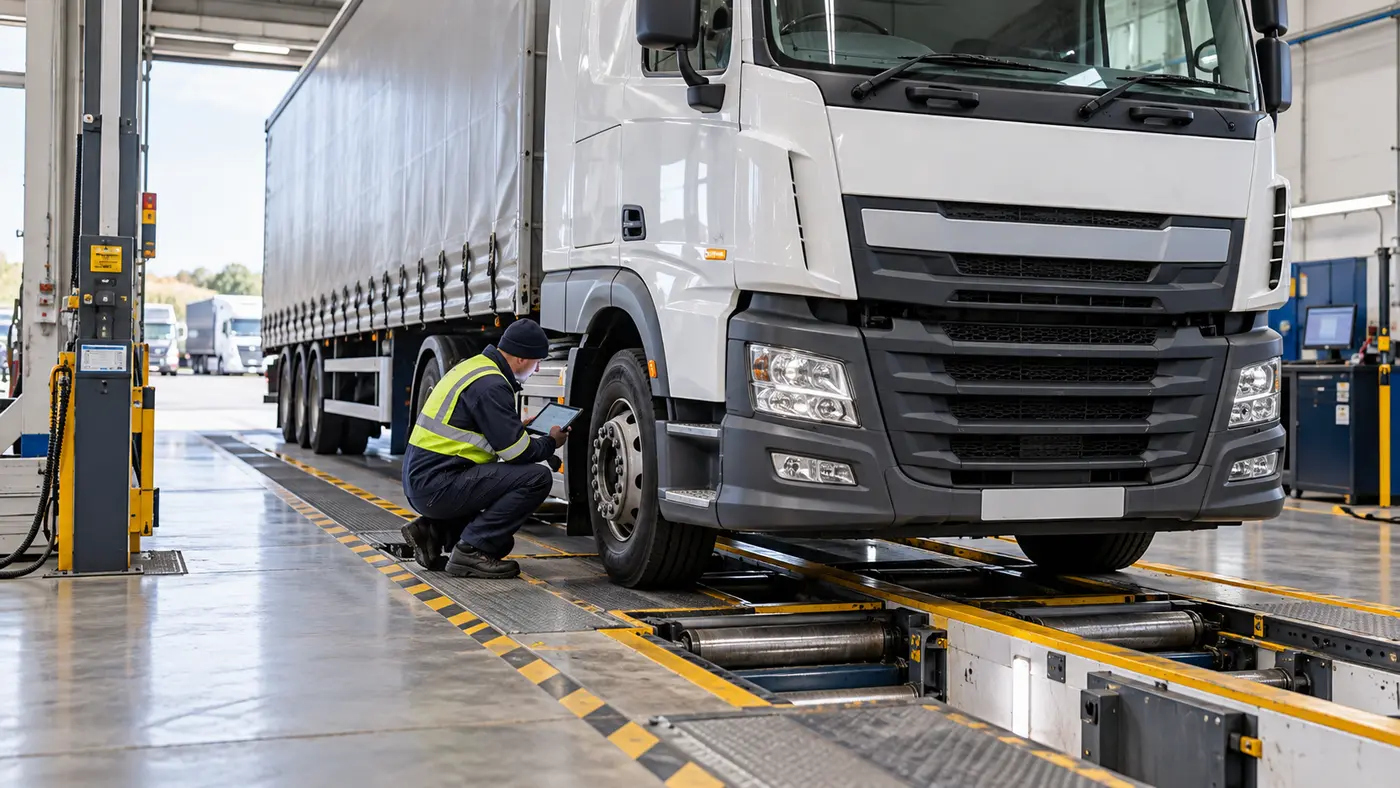
If the date on the plaque has passed, or the seller cannot say when the last visit was, treat it as a cost and a delay. The work must be done by the vehicle manufacturer or an approved tachograph calibration centre, and the centre issues a certificate showing details of any inspection. You can find a centre through GOV.UK’s approved tachograph centre finder.
Events that call for a new calibration
For digital and smart tachographs, GOV.UK lists events that require recalibration in between the regular dates. They include:
- after any repair to the tachograph
- if the vehicle registration number changes
- if the clock (UTC, universal time co-ordinated) is out by more than 20 minutes
- after an alteration to the circumference of the tyres or the characteristic coefficient
This matters on a used truck for a simple reason. If the lorry has had a private plate fitted, a repair to the unit or a change of tyre size, the plaque may no longer tell the whole story. Ask what has changed since the last calibration, and ask to see the certificate rather than relying on the sticker alone.
Before it goes into service
GOV.UK says operators must make sure the tachograph requirements are met before a new or used vehicle goes into service. In practice that means the check belongs in your buying process, not in your first week of ownership. A tractor unit that needs a calibration visit before it can start work is a truck that is not earning, and the booking may not suit your first load.
The same guidance says a faulty analogue or digital unit can be replaced as set out in the guidance, and that a unit used on international journeys must be replaced with a smart 2 tachograph. If you plan to work abroad, ask which generation of tachograph is fitted and read the current GOV.UK page for your type of work. We have not set out first-registration dates here because we have not confirmed them for this article.
Data, downloads and the handover
Responsibility for the data follows whoever controls the vehicle. GOV.UK says the vehicle unit should be downloaded at least every 90 calendar days, and a driver card at least every 28 calendar days. It also lists event-driven downloads, including immediately before control of the vehicle passes to another person. That is exactly what happens at a sale.
So ask the seller:
- when the vehicle unit was last downloaded, and whether the data has been kept
- whether any download failed, and whether there is a certificate of undownloadability (GOV.UK says operators keep these for at least 12 months)
- whether the unit has shown any faults or been repaired
The guidance also says operators must be able to produce records to enforcement officers for 12 months. When you buy a truck, your own records start on the day it enters service with you. Decide who will download the data and how you will store it before the lorry arrives. A company card, issued by DVLA, is needed to download vehicle unit data, so check that your business has one or has applied for one.
Where it fits with your other checks
Tachograph checks sit beside the rest of the paperwork, not in place of it. Look at the MOT history for the pattern of mileage and failures, and think about your operator’s licence before you commit. Our broader checklist, what to check before buying a truck, covers the rest of the enquiry, and the type pages such as tractor units show what is for sale now.
Allow for it in the price
A calibration visit, a repair or a missing certificate should be priced into your offer, along with any VAT due on the truck. If you are financing the purchase, tell the finance broker early about work needed before the lorry can run, because it affects the total you need to raise. Finance is subject to status and lender approval, and Direct Commercial Finance is a broker, not a lender.
This article is general information, not legal or compliance advice. Rules depend on the vehicle and the work it does, so check the current GOV.UK guidance or ask an approved tachograph centre about a particular truck.