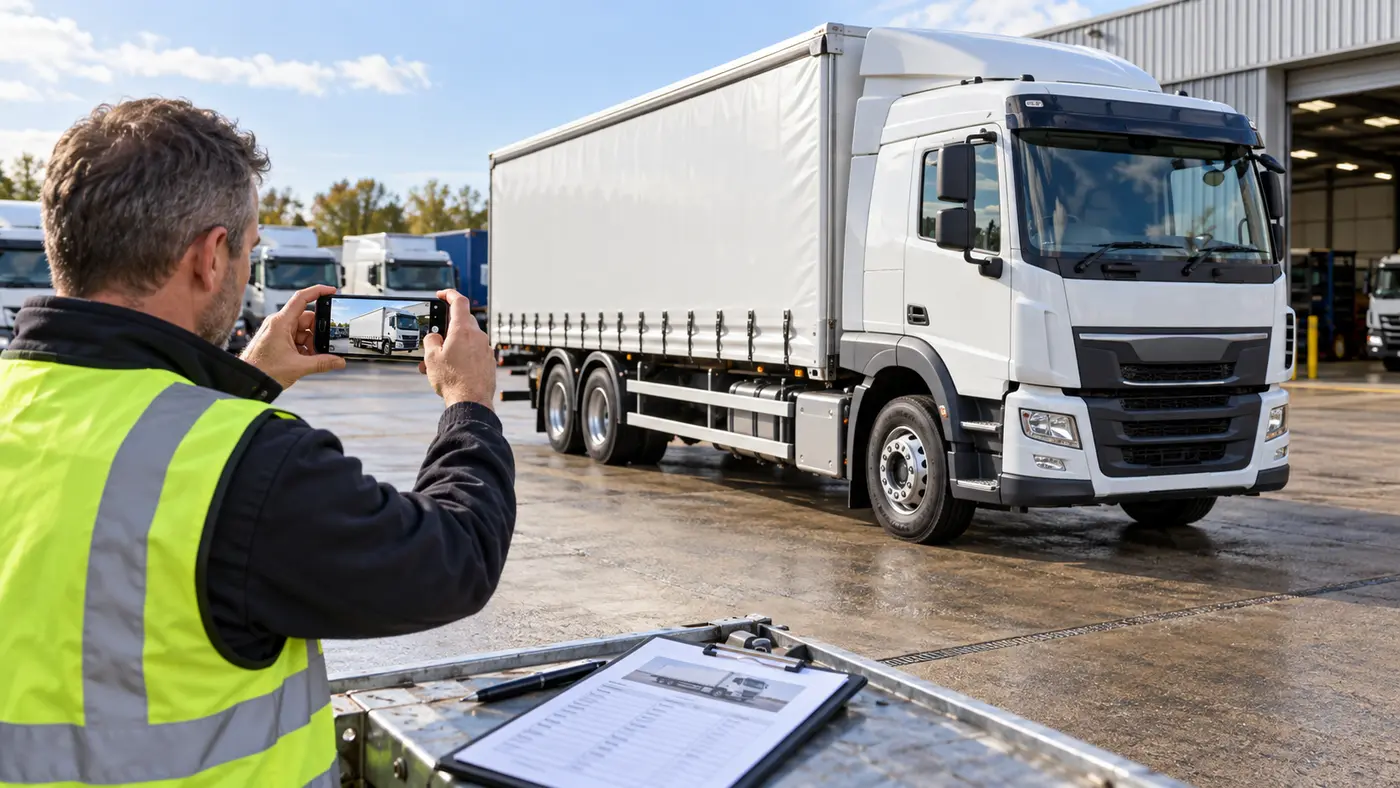
A buyer who travels to see your lorry is usually serious. What loses the sale at that point is rarely the truck. It is the pause when they ask for a document and you have to say you will find it. Most of the papers below can be gathered in an evening, and having them to hand tells a buyer the lorry has been looked after.
Listing on Trucksalot is free, and buyers contact you directly. This guide covers what to prepare once an enquiry turns into a viewing. It is general information, not legal advice. Where a rule matters, the link goes to the official guidance, and you should check it for your own sale.
The registration document and proof of who you are
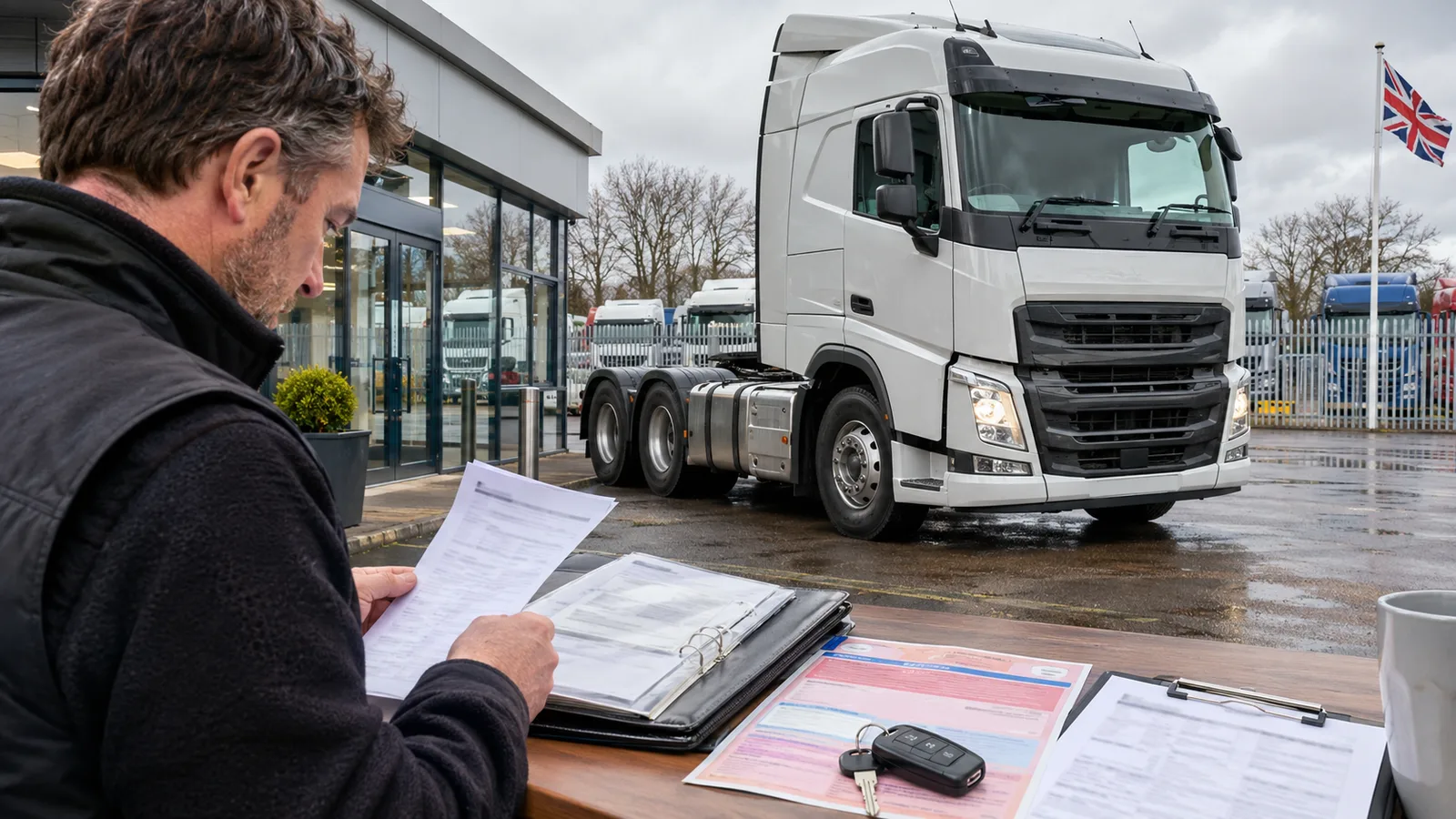
Start with the V5C registration certificate (the logbook). A buyer will want to see that the name and address on it match the person selling, and that the registration number, make and model match the advert. If you are selling on behalf of a business, be ready to explain how the business and the keeper relate. If the V5C is missing or out of date, deal with that before you advertise, not after the first viewing. GOV.UK sets out what a seller has to do when a vehicle changes hands, including telling DVLA, so read the current guidance on the day of sale rather than relying on memory.
If the lorry is on finance, say so early and ask your lender what is needed to settle it, so that the buyer is not left guessing about who owns the vehicle on the day.
Test and plating papers
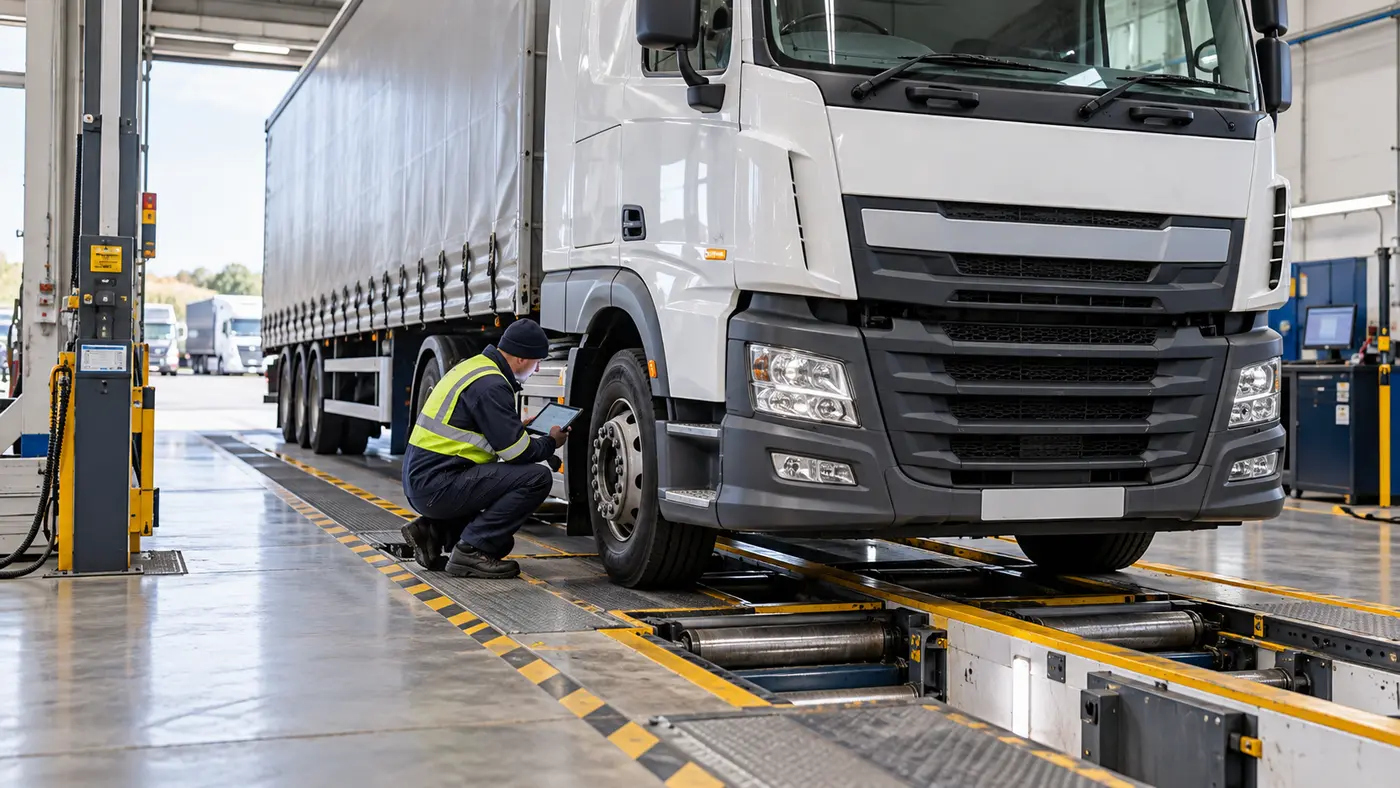
Lorries are tested annually and carry a plate that records their key weights. The ministry plate and plating certificate are paper documents that show important information about the vehicle, and a buyer comparing two trucks will look at them to check the plated weights against the advert. DVSA now lets you view and download a vehicle’s plating certificate and ministry plate free of charge through the MOT history service, as an A4 PDF holding an A5 certificate and an A5 plate. If you cannot use the service, a replacement can be requested using form VTG59, which was listed at £13 when we checked. For an HGV the plate is displayed in the cab, so check that it is there and legible.
Print the latest test certificate and any failure sheets or advisories from recent tests as well. A buyer can see the MOT history online anyway, so it is better to have an honest explanation ready for any past failure than to hope it goes unnoticed.
Tachograph records
If the truck has a tachograph, the paperwork matters on both sides of the sale. GOV.UK guidance for operators says digital and smart tachographs must be recalibrated every two years, and also after certain events such as a repair or a change of registration number. It also says analogue units must be inspected every two years and recalibrated every six. Keep the latest calibration certificate with the truck and bring it to the viewing.
The same guidance says operators must download the data from the vehicle unit immediately before transferring control of the vehicle to another person, for example when it is sold. Do that before the lorry leaves your yard, and ask your tachograph provider if you are unsure how to lock out your company card.
Service history and equipment records
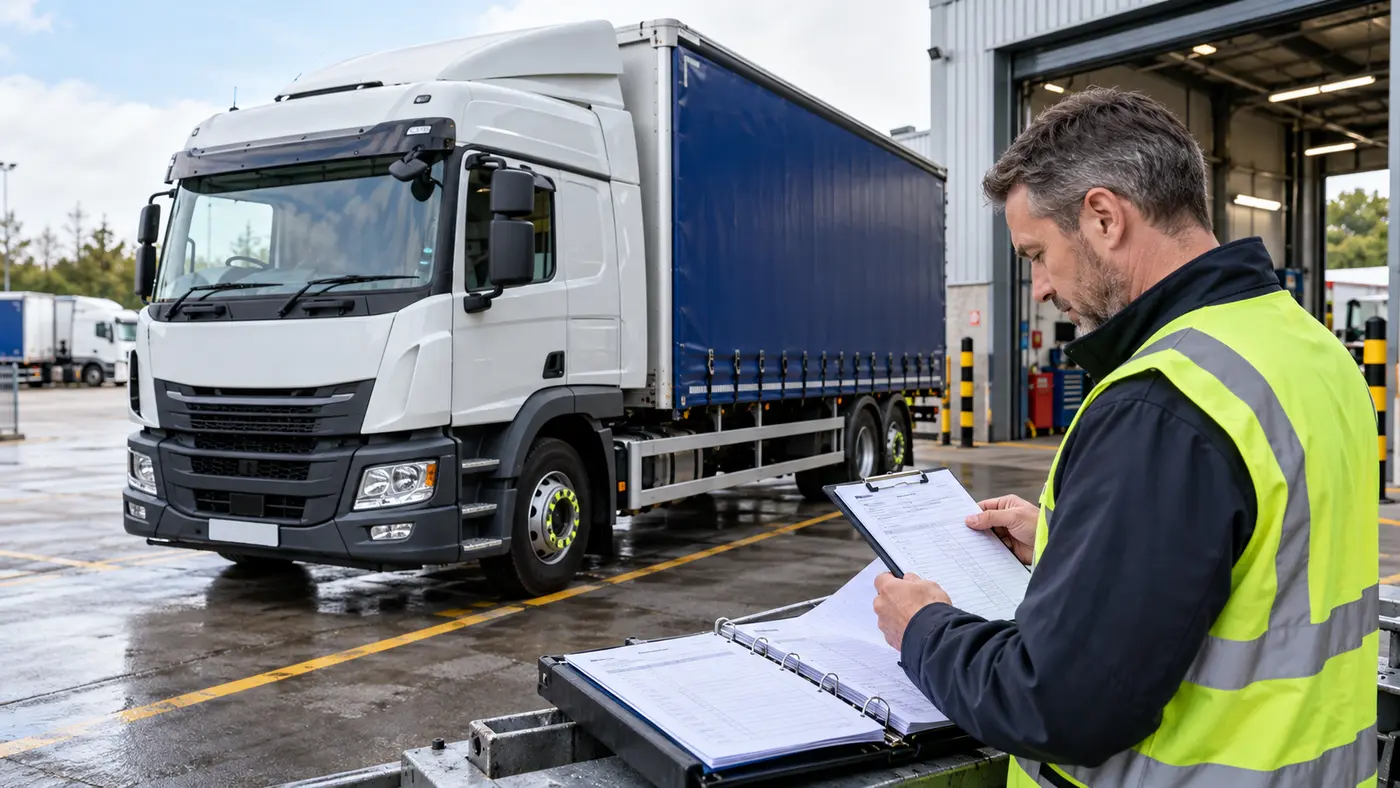
Service invoices, brake and tyre replacements, a gearbox or clutch job and any warranty work answer the question every buyer has: how has this been looked after? Put them in date order in a folder. If the truck carries a crane, tail lift, tipping gear or grab, add the latest thorough examination and any maintenance records for that equipment. These are the details that justify a price, and the ones that stop a buyer negotiating on doubt.
Gather keys and spare keys, the handbook, any body or equipment manuals, and the details of anything the advert says is included, such as a sheet, straps or a spare wheel. If something in the photographs is not included, say so in writing before the buyer arrives.
Your operator’s licence and the handover
Update your own fleet and operator’s licence records once the truck has gone, and remember the buyer needs to be authorised to operate it. That second part is the buyer’s responsibility, but they will appreciate a seller who understands the point. Our guide to the operator’s licence and the truck you are buying explains it from the buyer’s side. Agree the handover date and time, how payment will be made, and who is responsible for insurance and recovery if the lorry is not driven away that day. Write the agreed price, what is included and the date on a simple receipt that both of you sign.
Make the advert match the folder
The best check is to read your advert against the folder. Does the plated weight, axle layout, year and mileage in the advert match the documents? If you have not yet written the advert, our guide on how to write a truck advert buyers can use covers what to include. Buyers compare your truck with other trucks for sale on Trucksalot, and an advert that is backed by a tidy set of papers is easier to trust than one that is not.
A short checklist is enough: V5C, ID, test certificate and plating papers, tachograph calibration, service history, equipment examinations, keys and a receipt. Everything else you can answer at the viewing.