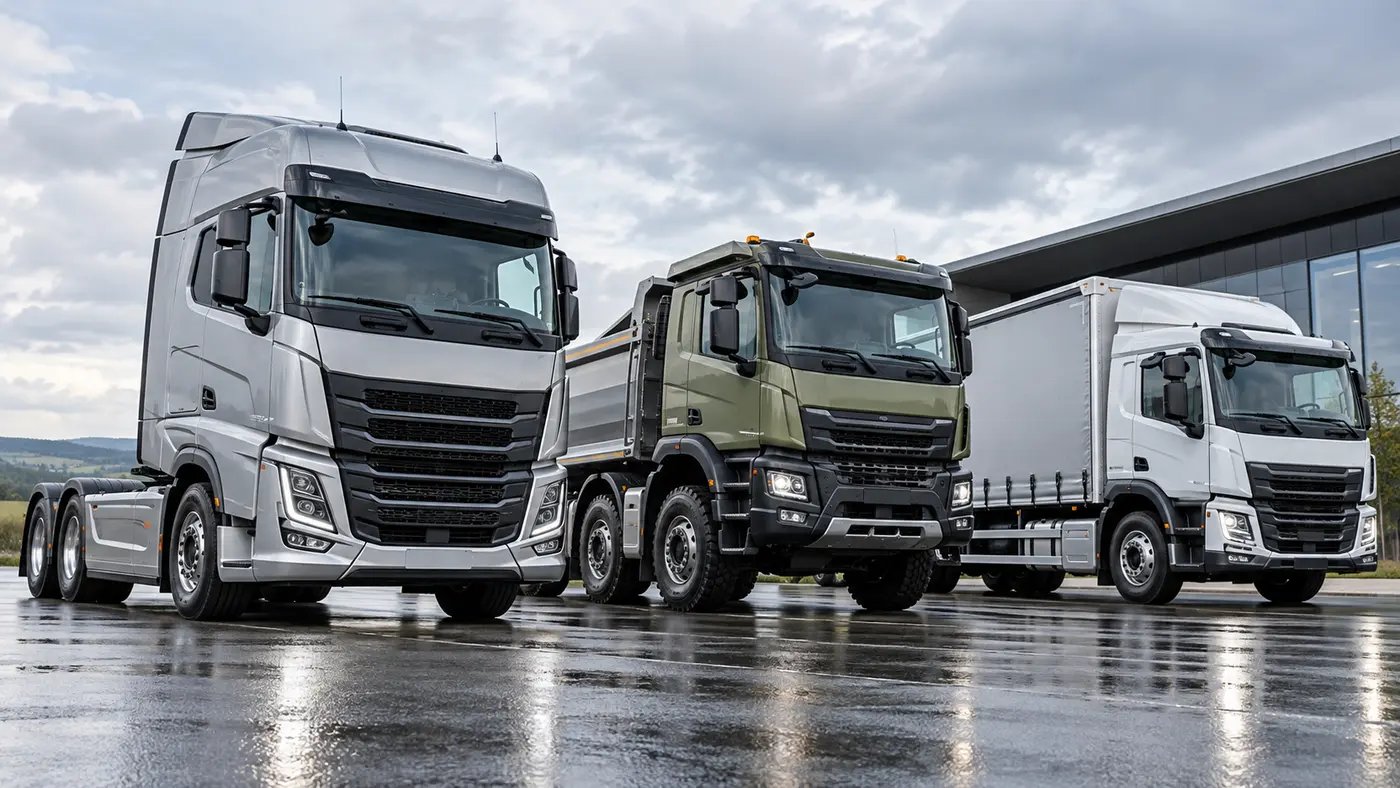
When a manufacturer launches a new truck, the announcement usually highlights a few headline numbers: power, torque, fuel efficiency improvements, battery range or a new cab design. Those figures are useful, but they rarely tell an operator whether the truck will do their job well.
This guide explains how to read a launch announcement or specification sheet with a buyer’s eye. It does not review any particular model. Trucksalot has not tested the vehicles referred to in manufacturer launches, and any figures you see should be confirmed with the manufacturer or supplying dealer for the exact specification you intend to buy.
Payload and gross vehicle weight
Gross vehicle weight (GVW) is the maximum permitted weight of the vehicle and its load. Gross combination weight (GCW) applies when a tractor unit or rigid is pulling a trailer. These figures tell you the legal ceiling, not how much you can carry.
Payload is what remains after the weight of the chassis, cab, fuel or batteries, body, equipment and driver. Launch material may quote a kerb weight for a base specification. Your truck, with its chosen cab, tanks or batteries, body and options, may weigh more. Ask for a weight calculation for your intended build, including individual axle loads.
Axle layouts
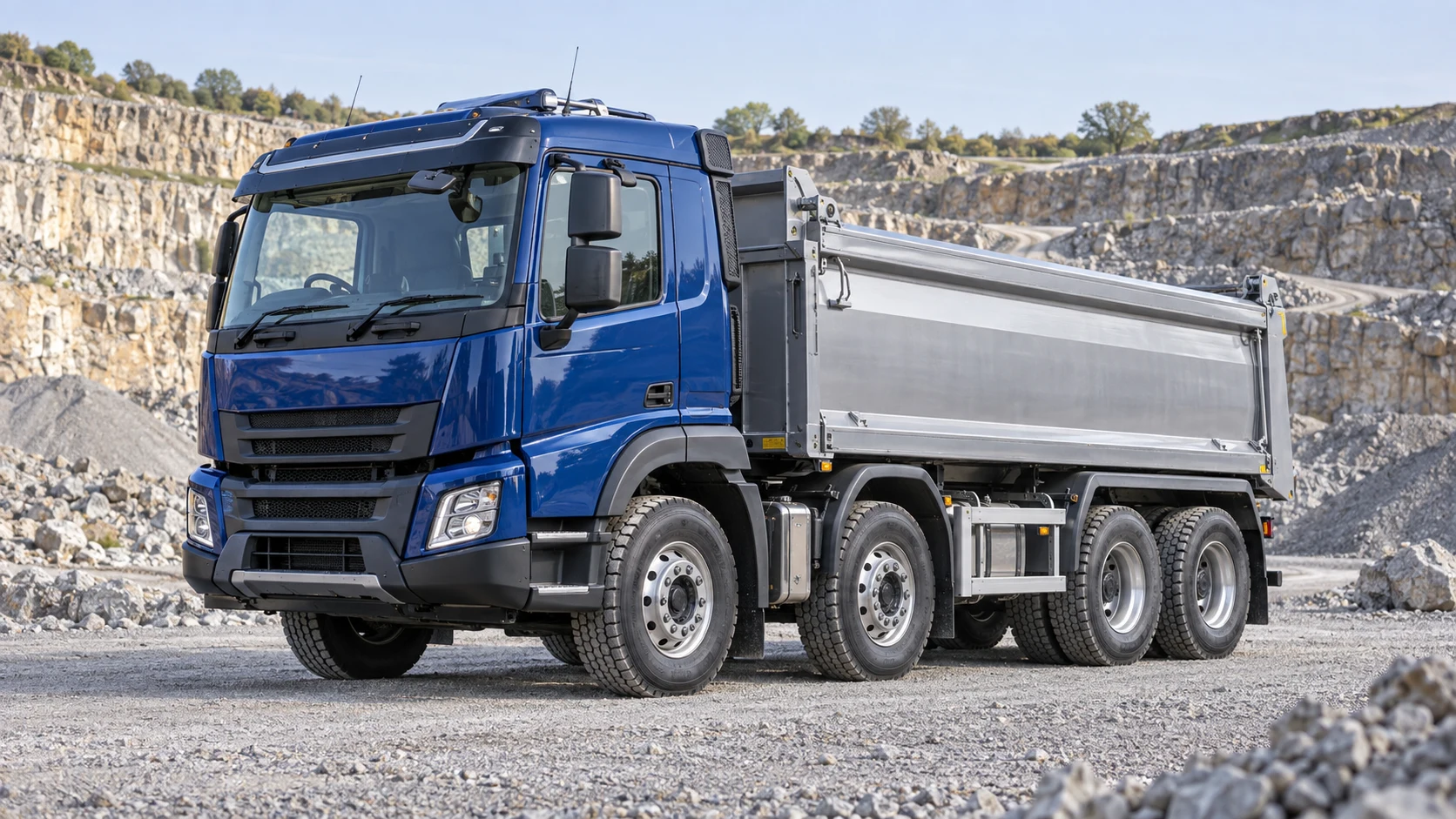
New models are often launched in a range of configurations, but not every configuration may be available in every market, with every cab or with every drivetrain at launch. Check that the layout you need, such as 6×2 with a lifting axle or an 8×4 for construction work, is offered in the UK in the specification you want.
Look at axle ratings, suspension options, wheelbases and ground clearance. For site work, ask about traction aids and approach angles. For distribution work, turning circle and rear steer options can matter more.
Engines, batteries and usable range
For diesel trucks, look beyond maximum power. Consider the torque curve, gearbox options, economy features and how the engine suits your typical load and route profile. Claimed efficiency gains are usually compared with a previous model under specific conditions, so ask what the comparison was based on.
For battery-electric trucks, ask about the usable battery capacity rather than just the total, and how quoted range was measured. Payload, temperature, terrain, speed and equipment all affect real range, and batteries gradually lose capacity with age. Check maximum charging power, how long a typical charge takes and which charging standards the vehicle supports. For other fuels, check refuelling availability on your routes.
Our guide to choosing between diesel and electric covers the operating questions in more detail.
Cab design
Launches frequently introduce a new or updated cab. The questions to ask are practical: which cab sizes and roof heights are available, how easy is access, how is storage arranged, and how good is visibility from the driver’s seat?
For vehicles working in towns and cities, direct vision matters. Operators of heavier trucks in Greater London need a Direct Vision Standard permit from Transport for London, and a cab with better direct vision can affect which safety equipment is required. Check the current TfL requirements for the specific vehicle.
Driver comfort
With drivers in short supply, the cab environment matters to recruitment and retention. Look at seat quality and adjustment, noise levels, climate control, parking heating or cooling, bunk size in sleeper cabs, and the layout of controls and displays. Where possible, let your drivers sit in or drive a demonstrator before ordering. Their feedback is often more useful than any brochure.
Safety technology
New trucks often come with a range of driver assistance and safety systems, such as emergency braking, lane keeping, blind-spot detection, camera systems and adaptive cruise control. Some are required by regulation on new vehicles; others are optional or part of higher trim levels.
Ask which systems are standard on the exact specification you are considering, which are optional and at what cost, and how they behave in your type of work. Systems that suit motorway driving may behave differently on construction sites. Make sure drivers receive proper training so that the technology is used as intended.
Bodybuilder compatibility
Most rigid trucks need a body fitted after the chassis is built. A new model can change chassis frame layouts, mounting points, electrical interfaces, PTO options or the space available for tanks and batteries. That can affect how easily your usual bodybuilder can work with it.
Check whether bodybuilder guidelines are available for the new model and share them with your bodybuilder before ordering. Confirm that cranes, tipping gear, tail lifts or refrigeration units can be fitted and powered as needed, and that the finished vehicle will still achieve the payload you require.
Warranty and support
A new model may be backed by a new warranty package or repair and maintenance contracts. Read the terms carefully: what is covered, for how long, at what mileage, and what conditions apply. For electric trucks, check battery warranty terms, including any guaranteed capacity over time.
Support matters too. Are local workshops trained and equipped for the new model? Are parts stocked in the UK? What roadside assistance is offered, and how quickly can it reach you?
Lead times
A launch date is not a delivery date. New models may reach some markets, configurations or cab variants before others, and demand can extend lead times. Body building adds further time after the chassis arrives.
If you need a vehicle by a particular date, ask for realistic chassis and body delivery estimates in writing, and consider whether a used or in-stock vehicle could cover the gap. You can browse trucks currently for sale on Trucksalot.
Whole-life cost
The list price is only one part of the cost of owning a truck. A fair comparison between a new model and alternatives should include:
- purchase price or finance costs, including deposit and term
- fuel or energy consumption based on your own work
- tyres, servicing, repairs and any maintenance contract
- insurance and road tax
- downtime and the cost of replacement vehicles
- expected value when you sell or hand the truck back
An improvement in efficiency or reliability can justify a higher purchase price, but only if it holds true in your operation. Build your own comparison rather than relying on launch claims.
How to use launch news
Launch coverage is a good way to learn what is coming and which questions to ask. Use it as the start of your research, then check the official manufacturer information, speak to the supplying dealer about the exact specification and, where possible, try the vehicle on your own work. When Trucksalot reports on new models, we will link to the manufacturer’s official announcement so you can read the original details for yourself.