Battery-electric trucks are now offered by several major manufacturers, and more operators are being asked by customers, local authorities and their own boards whether their next vehicle should be electric. At the same time, diesel remains the default for most heavy trucks working in the UK today.
There is no single right answer. An electric truck that suits one operator perfectly may be the wrong tool for another business running what looks like a similar vehicle. This guide sets out the questions that tend to decide the matter, so you can compare the options against your own work rather than general claims.
Start with daily mileage and duty cycle
The most important information is how the truck is used day to day. Look at real data where you can: telematics, tachograph records, route plans or delivery logs.
- Daily distance: not just the average, but the longest regular days and the occasional exceptional ones.
- Route profile: motorway, urban, rural, hilly or off-road work all affect energy use.
- Dwell time: how long the truck sits at the depot, customer sites or rest stops, and whether charging could happen there.
- Shift pattern: a single-shift truck that returns to base each night is very different from one that is double-shifted or nights out.
- Auxiliary loads: refrigeration, cranes, tipping gear and cab heating or cooling all draw energy.
Predictable, return-to-base work with a comfortable margin within the vehicle’s realistic range is generally where electric trucks are easiest to introduce. Long, variable or unpredictable journeys are harder to plan around current charging options.
Payload implications
Battery packs are heavy. Depending on the model and the battery capacity chosen, an electric truck may weigh more than an equivalent diesel, which can reduce the payload available at the same gross vehicle weight. Choosing more battery capacity for extra range usually adds more weight.
If your work regularly runs close to maximum weight, ask for a full weight calculation for the complete vehicle, including the body and equipment. Weight rules and any allowances for zero-emission vehicles can change, so check the current Department for Transport and DVSA guidance, and confirm the plated weights with the supplying dealer.
Depot charging
For most operators considering electric trucks, charging at their own depot is the foundation. That raises practical questions well before the truck arrives:
- Does the site have enough electrical capacity, or will it need a grid connection upgrade? Upgrades can take time and involve your distribution network operator.
- Where will chargers go, and can trucks be parked and manoeuvred around them safely?
- Do you own or control the site for long enough to justify the investment?
- How many vehicles will need to charge at once, and over what period?
Speak to an electrical contractor and your energy supplier early. Charging infrastructure can be a significant part of the overall project.
Range and charging downtime
Published range figures are produced under specific test conditions. Real range varies with payload, weather, terrain, speed, driving style, auxiliary equipment and battery age. Plan with a safety margin and, if possible, trial a vehicle on your own routes before committing.
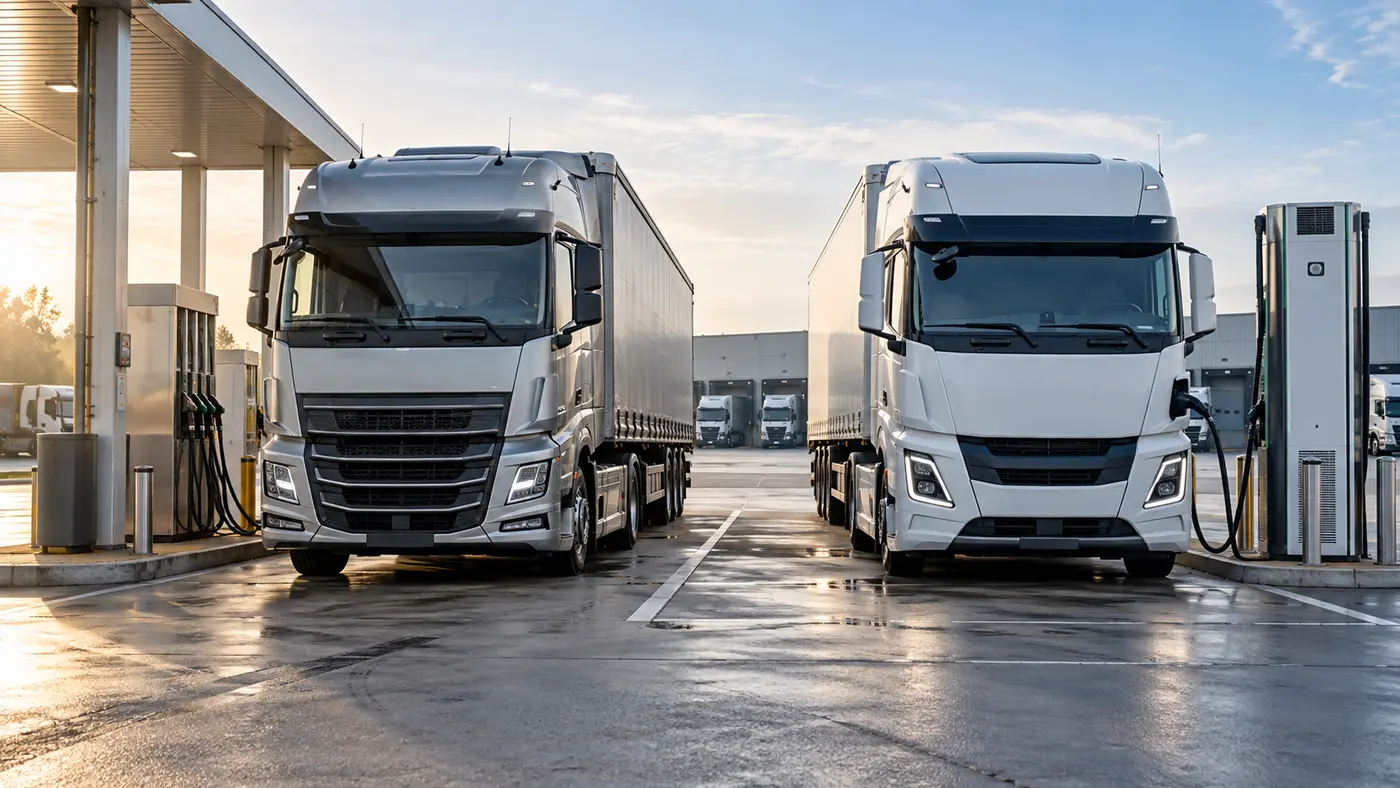
Time spent charging is time the truck is not working. Overnight depot charging may have little effect on productivity for single-shift work. For vehicles that need to top up during the day, look at where public or customer-site chargers are available for heavy vehicles, whether they can be booked and how long a charge takes. Diesel refuelling is quick and widely available, which remains an advantage for high-mileage and irregular work.
Urban and long-distance suitability
Urban and regional distribution, with frequent stops, lower average speeds and regular returns to base, is often a good match for electric trucks. Regenerative braking can recover energy in stop-start traffic, and quiet operation can help with early morning or evening deliveries.
Long-distance and heavy haulage work is more demanding. High continuous speeds, heavy loads and long days use more energy, and depend on reliable charging along the route. Electric options for this work are developing, but each case needs careful planning. Operators running into areas with clean air charging schemes should check the rules that apply to each vehicle, whichever fuel type they choose.
Energy costs
Fuel or energy is one of the largest running costs for any truck. Comparing diesel and electricity is not straightforward:
- Electricity costs vary widely between depot charging on a business tariff, off-peak rates and public rapid chargers.
- Diesel prices move with global markets, and your fuel card or bunkered fuel price may differ from pump prices.
- Consumption depends on your work, so use realistic figures rather than best-case examples.
Build a comparison using your own expected mileage and prices, and test what happens if those prices rise or fall. Avoid relying on any single headline figure, including ours.
Maintenance
An electric drivetrain has fewer moving parts than a diesel engine, with no engine oil, fuel filters or exhaust after-treatment system to service. That can reduce some routine maintenance. However, electric trucks still need brakes, tyres, suspension, cab, body and high-voltage system checks, and heavier vehicles may wear tyres differently.
Check whether local workshops are trained and equipped to work on high-voltage systems, how quickly specialist parts can be supplied and what the battery warranty covers, including any conditions about battery health over time.
Residual values
What a truck is worth when you sell or hand it back affects its true cost. Diesel trucks have a long, established used market, so their values are relatively well understood. The used market for electric trucks is much younger, so there is less history to judge future values. Battery condition, technology changes and demand from second-hand buyers are all uncertain.
If you plan to use finance, the structure of the agreement can affect how much of that residual value risk your business carries. It is worth discussing this before you decide. Any finance is subject to status and lender approval, and this article is general information rather than financial advice.
Other things worth considering
- Customer requirements: some customers ask for low or zero-emission deliveries in their contracts.
- Driver training: drivers may need guidance on getting the best range and on charging safely.
- Grants and incentives: government support has changed over time, so check what is currently available rather than relying on older information.
- Mixed fleets: many operators start by switching the routes that suit electric best while keeping diesel for the rest.
The right choice depends on the work
Neither diesel nor electric is always cheaper or always better. An electric truck can be an excellent fit for predictable, return-to-base work with good depot charging. A diesel truck may be the more practical option for long, variable or heavy work, or where charging is not yet available.
Gather your own data, speak to more than one supplier, ask for trials where possible and compare whole-life costs for your operation. Confirm range, weights, charging requirements and warranty terms directly with the manufacturer or supplying dealer before you order. For other points to check, see what to check before buying a new truck.