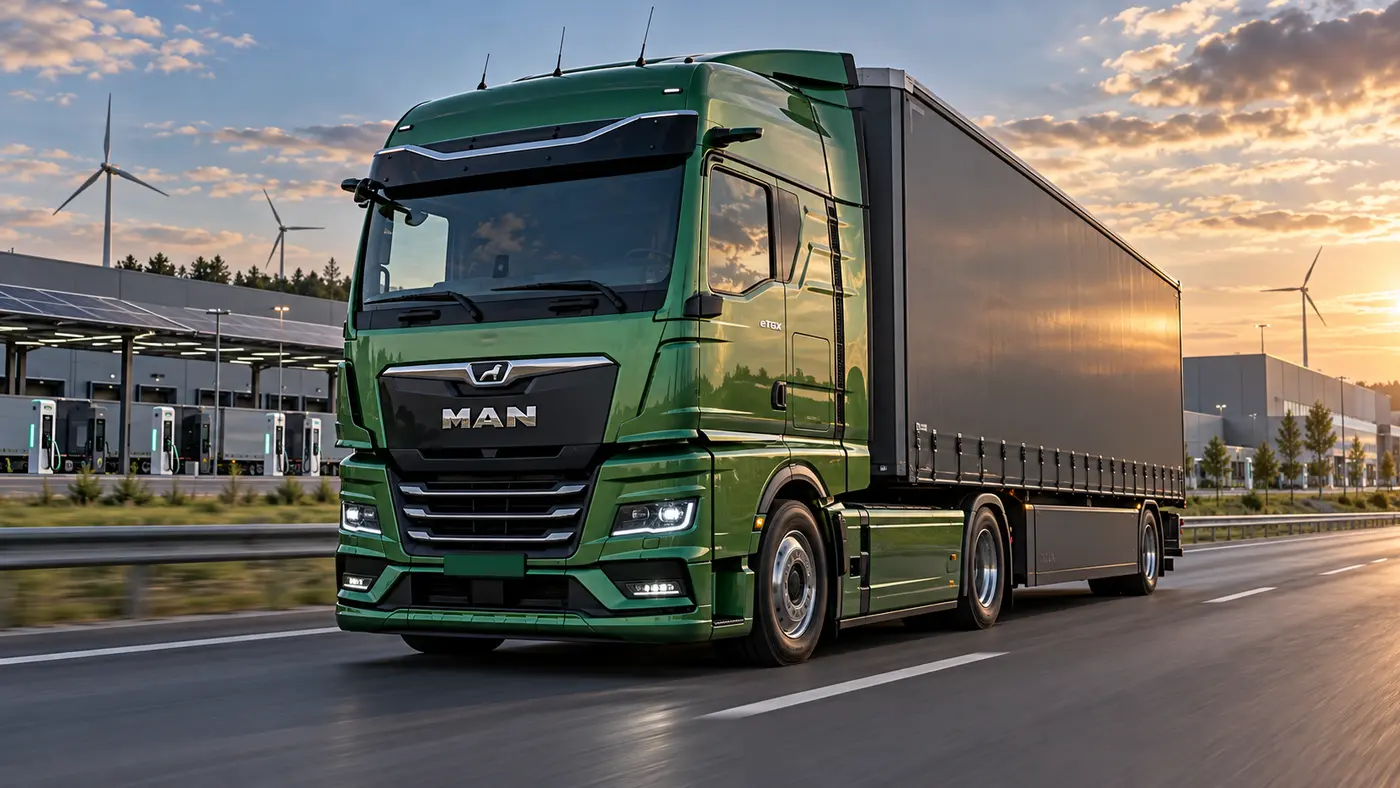
MAN has unveiled a new generation of its battery-electric eTGX for heavy long-haul work, with a claimed maximum range of up to 720 kilometres (about 447 miles) in a seven-battery 6×2 tractor configuration. The truck was presented at IAA Transportation 2026 on 21 September.
The headline range is significant, but it is not the same as a guaranteed working distance. For a UK operator, the useful questions are how the truck is configured, what range MAN expects in typical service, what payload remains, and whether the depot and route can support its charging requirements.
What MAN has announced
The updated eTGX combines a new battery generation with a reshaped cab front and stronger regenerative braking. MAN says the changes make the truck up to three per cent more energy-efficient than its predecessor.
There are two long-haul configurations at the centre of the announcement:
- 4×2 tractor, six battery packs: 552 kWh total capacity, a claimed maximum range of up to 660 km (about 410 miles), and what MAN describes as well over 500 km in typical long-haul use.
- 6×2 tractor, seven battery packs: 644 kWh total capacity, a claimed maximum range of up to 720 km (about 447 miles), and more than 600 km in typical everyday long-haul use, according to MAN.
Each new pack has 92 kWh gross capacity and 88 kWh usable capacity. MAN says improvements to cell chemistry raise usable energy by ten per cent without increasing the pack's weight or external size. The seventh pack in the 6×2 sits across the chassis behind the cab.
Range: plan from the realistic number, not the maximum
A maximum-range figure is useful for comparing generations, but it should not be the number used to write a transport plan. Payload, motorway speed, hills, cold weather, wind, auxiliary equipment and available charging time can all change the distance achieved.
For an initial feasibility study, start with the route data from the diesel vehicle being replaced. Record daily mileage, time parked at the depot, driver breaks, trailer type, typical payload and seasonal peaks. Then ask the supplying dealer to model the exact eTGX specification against those journeys, leaving a sensible operating reserve rather than planning to arrive nearly empty.
Operators comparing powertrains can also read our practical guide to choosing between diesel and electric trucks.
Payload and axle layout need equal attention
MAN says a six-battery 4×2 tractor has an unladen weight of 10.7 tonnes and can offer up to 25 tonnes of payload with a standard semi-trailer. That is a manufacturer figure for a particular configuration, not a promise for every finished vehicle.
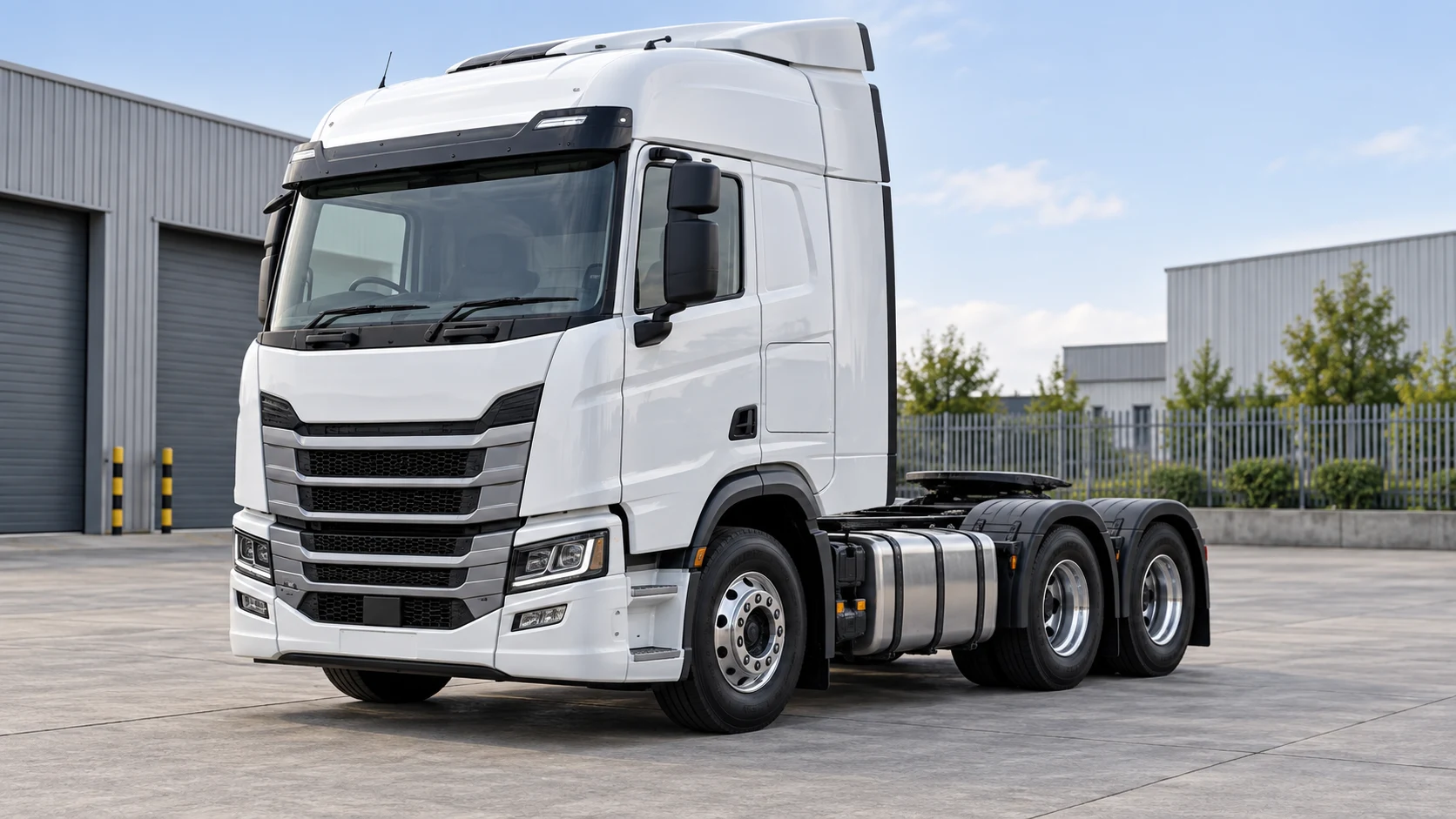
The seven-battery truck uses a 6×2 layout with a steerable tag axle. That creates room for the additional battery and allows a 15-tonne fifth-wheel load in the configuration described by MAN. It may suit work that needs extra range or a three-axle tractor, but it also changes the vehicle's weight distribution and specification.
Before ordering, request a written weight calculation covering the exact cab, wheelbase, batteries, fifth wheel, trailer, options and driver allowance. The usable payload and individual axle loads matter more than the brochure's gross battery capacity.
750 kW charging is powerful, but the site must support it
The optional Megawatt Charging System connection is rated at up to 750 kW. MAN says this can bring charging time down to roughly 30 minutes, designed to fit into a driver's statutory break. That could make longer electric trunk routes practical, but “up to 750 kW” describes the vehicle's peak capability, not the power automatically available at a depot or public charger.
A fleet considering the truck should establish:
- whether a suitable MCS charger exists on the route or needs to be installed at the depot
- the grid connection, charger and civil-work cost
- the charging curve and energy added during a real 30-minute stop
- how charging is shared when several trucks return together
- what operational fallback exists if a charger is unavailable
Depot charging and connection work can take longer than vehicle procurement. Treat the truck, charger, grid capacity and operating schedule as one project.
Power and regenerative braking
The new electric driveline range includes outputs of 349 PS, 490 PS and 598 PS. MAN says the top 440 kW version can recuperate at up to 480 kW, while the lower-output versions also receive stronger recuperation.
Regeneration can reduce friction-brake use and return energy to the battery, especially on undulating routes. The benefit will vary with terrain, load, speed and driving style, so operators should ask for route-specific energy estimates and include driver training in the introduction plan.
Cab changes focus on efficiency and direct vision
The new front extends 120 mm further forward and is shaped to reduce aerodynamic drag. MAN has also lowered parts of the dashboard and windscreen-wiper installation and added a low-level window in the passenger door.
Those changes are intended to improve the driver's direct view of people close to the front and nearside of the cab. For trucks working in towns or Greater London, direct vision and the equipment needed for the current safety permit should be checked for the exact vehicle rather than inferred from the model family.
What UK support may be available?
The UK Zero Emission Van and Truck Grant can reduce the purchase price of an eligible vehicle. In March 2026, the government said the heaviest eligible zero-emission trucks could receive up to £81,000, covering up to 40 per cent of purchase cost. The seller applies the discount; the buyer does not submit a separate grant application.
Eligibility is model-specific and scheme rules can change. MAN's launch announcement does not confirm that every new eTGX variant is on the UK eligible-vehicle list, so obtain written confirmation for the exact model before building the grant into a business case.
The questions to put to a MAN dealer
- When will the exact 4×2 or 6×2 version be available to order and deliver in the UK?
- What real range is expected on our routes at our normal weights and speeds?
- What are the guaranteed usable battery capacity and warranty terms?
- What charging power can the truck sustain, not just reach briefly?
- What will the finished tractor weigh with our chosen cab and options?
- Is the exact vehicle eligible for the current UK grant, and what is the confirmed discount?
- Which local workshops can maintain the high-voltage system and what roadside cover applies?
The announcement is a meaningful step towards electric long-haul operation, particularly because the typical-use figure now moves beyond 600 km in the seven-battery configuration. The buying decision still rests on route evidence, charging capacity, payload and support. Use the launch figures as the start of the conversation, then price and test the complete operation.
For more help interpreting a launch specification, see the truck specifications that matter. You can also browse MAN trucks currently advertised on Trucksalot or explore commercial vehicle finance through DCF.